
Slaves in the first-century Roman Empire lived with a single desperate hope: that someone would pay the price to set them free.
Approximately 60 million people throughout the empire knew the crushing weight of bondage, the daily reality of belonging to another person, the impossibility of purchasing their own freedom.
When Paul wrote to the Ephesian church about redemption, every believer would have understood exactly what he meant.
Many sitting in that congregation had been slaves themselves.
They knew what it meant to be bought, owned, and controlled.
They understood the cost of freedom.
Now Paul declares the most liberating truth in human history: believers have been redeemed through the blood of Christ.
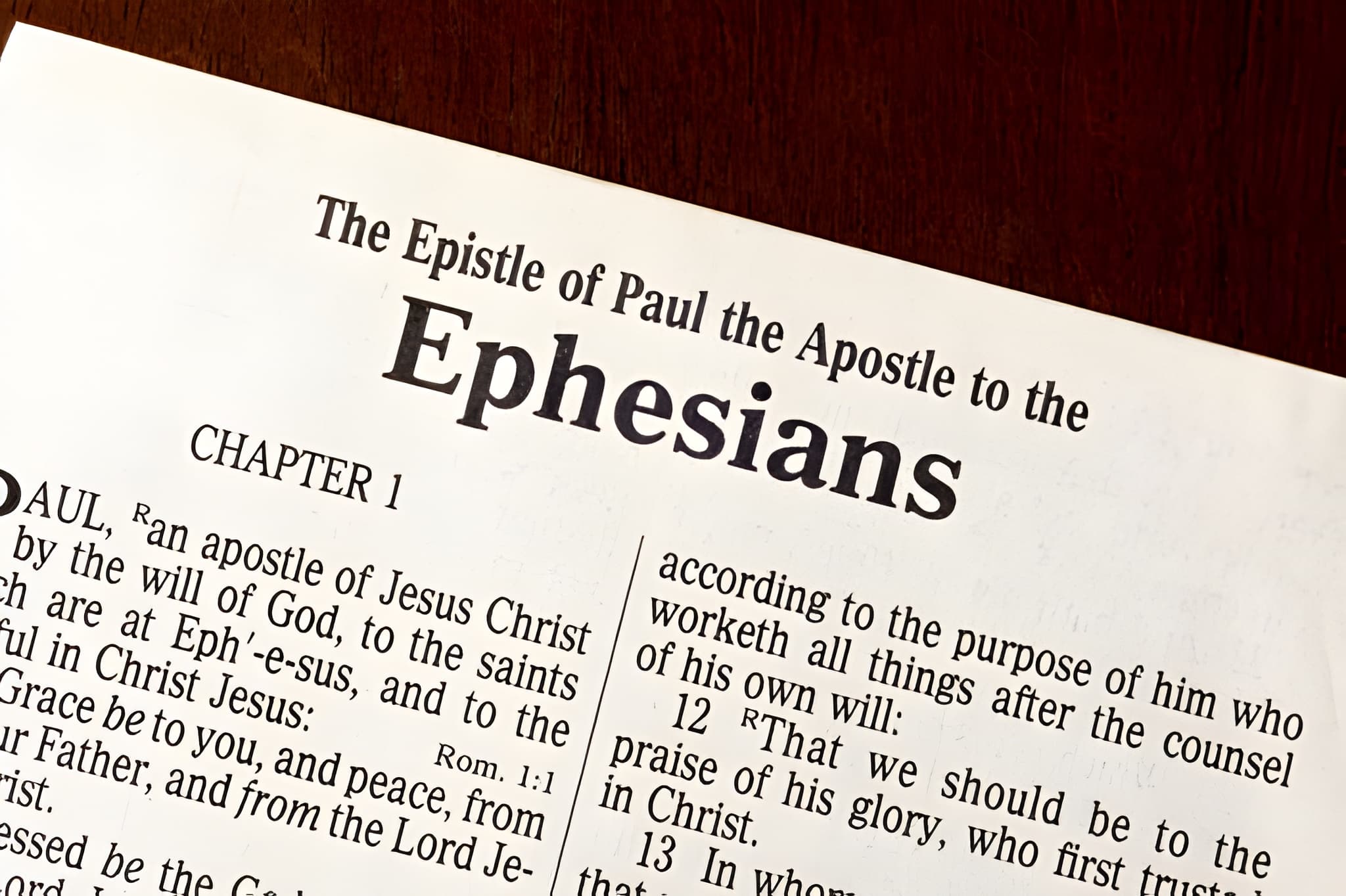
“In whom we have redemption through his blood, the forgiveness of sins, according to the riches of his grace.”
Ephesians 1:7 (KJV)
This single verse contains the entire gospel in compressed form.
It reveals what Christ has done, how He did it, what it accomplishes, and why it happened.
Understanding Ephesians 1:7 transforms how you see yourself, your sin, and your Savior.
The Meaning of Redemption
The Greek word Paul uses for “redemption” is apolutrosis (ἀπολύτρωσις).
This wasn’t religious jargon. It was a common marketplace term that every first-century reader would recognize immediately.
Apolutrosis combines two Greek words: apo (meaning “away from”) and lutron (meaning “ransom” or “price paid”).
Together, they describe the act of releasing someone from bondage by paying a ransom price in full.
In the Roman world, this word appeared regularly in three contexts.
First, it described freeing prisoners of war by paying their ransom.
Second, it referred to releasing slaves by purchasing their freedom.
Third, it meant posting bail or paying a fine to free someone from prison.
The Jewish historian Josephus used apolutrosis to describe the release of prisoners through payment of a price.
Secular Greek literature employed it as a technical term for the money paid to buy back captives or emancipate slaves from their masters.
When Paul writes “we have redemption,” he’s declaring that believers have been purchased out of slavery, bought back from bondage, ransomed from captivity.
But unlike earthly redemption that might be temporary or conditional, this redemption is complete, permanent, and irreversible.
We Have Redemption
Notice Paul doesn’t say we “will have” redemption or we “might have” redemption. He says “we have redemption.” Present tense. Already accomplished. Currently possessed.
This redemption is not a future hope you’re working toward. It’s not a reward for spiritual maturity. It’s not something you’ll receive if you perform well enough. It’s a present reality for everyone who is in Christ.
The phrase “in whom” appears throughout Ephesians 1. Every spiritual blessing comes to those who are “in Christ.” Apart from Christ, there is no redemption. But in Christ, redemption is complete, secure, and permanent.
You are not partially redeemed, waiting for the rest to happen. You are not temporarily free, hoping the ransom holds. You are fully redeemed, completely set free, permanently purchased by Christ’s blood.
Through His Blood
Paul specifies exactly how redemption was accomplished: through Christ’s blood.
This isn’t metaphorical or symbolic. The actual death of Jesus Christ on the cross paid the ransom price for your freedom.
The connection between blood and redemption reaches back through the entire Old Testament.
The blood of Passover lambs protected Israel from judgment in Egypt.
The blood of sacrifices temporarily covered sin under the old covenant. But these were shadows pointing to the ultimate sacrifice.
Hebrews 9:22 declares, “Without shedding of blood is no remission.”
The penalty for sin is death. Someone had to die.
Either you pay the penalty yourself, suffering eternal separation from God, or someone else pays it for you.
Jesus became that someone else. He didn’t die as a martyr for a cause. He didn’t die as an example of love.
died as a substitute, bearing the penalty that your sin deserved.
His blood satisfied divine justice, paid the ransom price in full, and purchased your freedom from sin’s dominion.
First Peter 1:18-19 explains, “Ye were not redeemed with corruptible things, as silver and gold, from your vain conversation received by tradition from your fathers; But with the precious blood of Christ, as of a lamb without blemish and without spot.”
The price of your redemption wasn’t money. It was infinitely more costly. It required the perfect, spotless blood of God’s only Son.
The Forgiveness of Sins
Paul immediately defines what redemption means: “the forgiveness of sins.” This isn’t a separate blessing added to redemption. It’s the explanation of what redemption accomplishes.
The Greek word for “forgiveness” is aphesis (ἄφεσις), which means release, dismissal, or sending away. It’s the same root used for divorce (releasing from marriage) or freeing a prisoner (releasing from bondage).
When God forgives your sins, He doesn’t minimize them or overlook them. He releases you from their penalty. He dismisses the charges against you. He sends your sins away completely, as far as the east is from the west.
Paul uses “sins” (plural) rather than “sin” (singular). It’s not just your sinful nature that’s addressed, but every individual sinful act, word, and thought. Every trespass. Every transgression. Every crossing of God’s righteous boundary. All of it forgiven through Christ’s blood.
This forgiveness is complete. It covers past sins, present sins, and future sins. It deals with sins you remember and sins you’ve forgotten. It addresses sins you’re aware of and sins you commit in ignorance. Nothing is left out.
According to the Riches of His Grace
The final phrase reveals the source and measure of redemption: “according to the riches of his grace.”
This doesn’t say “out of” God’s riches but “according to” them. There’s a crucial difference.
Someone might give out of their riches but still be stingy.
A wealthy person could donate a small amount from vast resources.
But giving according to riches means the gift matches the resources.
It’s proportional to the wealth available.
God doesn’t redeem you from a limited supply of grace. He redeems you according to infinite riches of grace. His grace is not diminishing. It’s not running low.
It’s not rationed or measured out carefully. It’s lavish, abundant, and inexhaustible.
The word “riches” (ploutos) refers to wealth, abundance, and fullness. God’s grace is not barely sufficient; it overflows. He doesn’t redeem you reluctantly or sparingly. He redeems you generously from unlimited resources of grace.
This means several crucial things.
First, you can never exhaust God’s grace. No matter how many times you fail, grace remains abundant.
Second, you didn’t deserve this grace and can’t earn it. Grace is unmerited favor freely given.
Third, your redemption cost God everything but costs you nothing.
What You’ve Been Redeemed From
Scripture describes multiple aspects of the bondage from which Christ has redeemed believers.
Redeemed from sin’s penalty. Romans 6:23 declares that “the wages of sin is death.” Every sin earns death as payment. Christ redeemed you from the eternal death penalty your sin deserved.
Redeemed from sin’s power. Romans 6:14 promises that “sin shall not have dominion over you: for ye are not under the law, but under grace.” You’re no longer enslaved to sin’s controlling power. You’ve been set free to live in righteousness.
Redeemed from the law’s curse. Galatians 3:13 explains, “Christ hath redeemed us from the curse of the law, being made a curse for us.” The law demanded perfect obedience and pronounced a curse on everyone who failed. Christ bore that curse so you could be free.
Redeemed from empty living. First Peter 1:18 mentions redemption “from your vain conversation received by tradition from your fathers.” You’ve been freed from the futility and emptiness of life apart from God.
Redeemed from Satan’s dominion. Colossians 1:13 declares God “hath delivered us from the power of darkness, and hath translated us into the kingdom of his dear Son.” You’ve been transferred from Satan’s kingdom to Christ’s kingdom.
What Redemption Means for Daily Life
Redemption isn’t just a theological concept for academic study. It has profound practical implications for how you live.
Stop living like a slave. If Christ has set you free, stop acting like you’re still in bondage. You don’t have to obey sin’s demands anymore. You don’t belong to your old master. You’ve been purchased by Christ and belong to Him now.
Remember what redemption cost. Your freedom wasn’t cheap. It cost the blood of God’s Son. This should produce gratitude, not presumption. Don’t treat grace casually when it was purchased at such an infinite price.
Live as one who’s been forgiven. Forgiven people should be forgiving people. Ephesians 4:32 commands, “Be ye kind one to another, tenderhearted, forgiving one another, even as God for Christ’s sake hath forgiven you.” The measure of God’s forgiveness toward you should determine your forgiveness toward others.
Trust God’s grace completely. If God redeemed you according to the riches of His grace, you never need to fear that grace running out. When you fail, run to grace, not from it. When you struggle, lean on grace, not your own strength.
Worship the Redeemer. Revelation 5:9 records heaven’s song: “Thou art worthy to take the book, and to open the seals thereof: for thou wast slain, and hast redeemed us to God by thy blood out of every kindred, and tongue, and people, and nation.” Those who understand redemption will spend eternity worshiping the Redeemer.
Frequently Asked Questions
If redemption is already complete, why does Romans 8:23 speak of waiting for redemption?
Ephesians 1:7 refers to redemption of the soul, which is already accomplished. Romans 8:23 refers to redemption of the body, which awaits the resurrection. Your spirit has been redeemed, but your physical body still experiences the effects of living in a fallen world. Complete redemption includes the redemption of your body, which happens when Christ returns.
Does “the forgiveness of sins” mean God forgets my sins?
God is omniscient and cannot literally forget anything. The Bible uses language like “I will remember their sin no more” (Jeremiah 31:34) to indicate that God will not hold sins against believers. He chooses not to bring them up or count them. Your sins are forgiven, removed, and will never be used to condemn you.
Can I lose my redemption if I sin after being saved?
Redemption was purchased by Christ’s blood, not your performance. First Peter 1:18-19 emphasizes you were redeemed “with the precious blood of Christ,” not with your good behavior. Since Christ’s blood is eternally sufficient, redemption is eternally secure. You cannot un-redeem yourself through sin any more than a freed slave could re-enslave himself through poor choices.
Why does Paul emphasize “the riches of his grace” specifically?
Because our natural tendency is to think grace has limits. We imagine God’s patience running out, His forgiveness exhausting, His grace diminishing. Paul emphasizes riches of grace to combat this fear. God’s grace is as infinite as God Himself. It never decreases, never depletes, never diminishes.
How should understanding redemption change how I view myself?
You should see yourself as someone immensely valuable (worth the blood of Christ), deeply loved (redeemed by grace, not merit), completely forgiven (sins released, not held against you), and eternally secure (purchased by an eternal sacrifice). Your identity is not sinner but redeemed saint, not slave but free, not condemned but forgiven.
Prayer of Gratitude for Redemption
Heavenly Father, I stand in awe of the redemption purchased through Christ’s blood. Thank You for paying the ransom I could never pay, for freeing me from bondage I could never break. Thank You that my forgiveness is complete, purchased by the precious blood of Your Son. Help me live as one who’s been set free, not returning to slavery but walking in the liberty Christ secured. When I fail, remind me that Your grace is rich, abundant, and sufficient. May I never forget what redemption cost You. Transform my gratitude into obedience, my freedom into service, my forgiveness into worship. In Jesus’ name, Amen.
References
BibleRef.com. (n.d.). What does Ephesians 1:7 mean? [Biblical commentary]
Bible Study Tools. (n.d.). Ephesians 1:7 – In whom we have redemption through his blood. [Verse exposition]
GotQuestions.org. (2022). What does it mean that in Him we have redemption (Ephesians 1:7)? [Theological study]
Precept Austin. (n.d.). Ephesians 1:7-8 commentary. [Exegetical analysis]
Bible Alive. (n.d.). Ephesians 1:7 – What does it mean to be redeemed? [Devotional study]
Pure Spiritual Milk. (2014). Redemption in Christ – Ephesians 1:7. [Biblical teaching]
Strong’s Concordance. (n.d.). Greek 629: Apolutrosis – Redemption. [Greek lexicon]
Mounce, W. D. (n.d.). Apolutrosis. Greek dictionary. [Lexical study]
Easton’s Bible Dictionary. (n.d.). Redemption. [Reference article]
Institute for Creation Research. (n.d.). Redeemed! [Biblical exposition]