
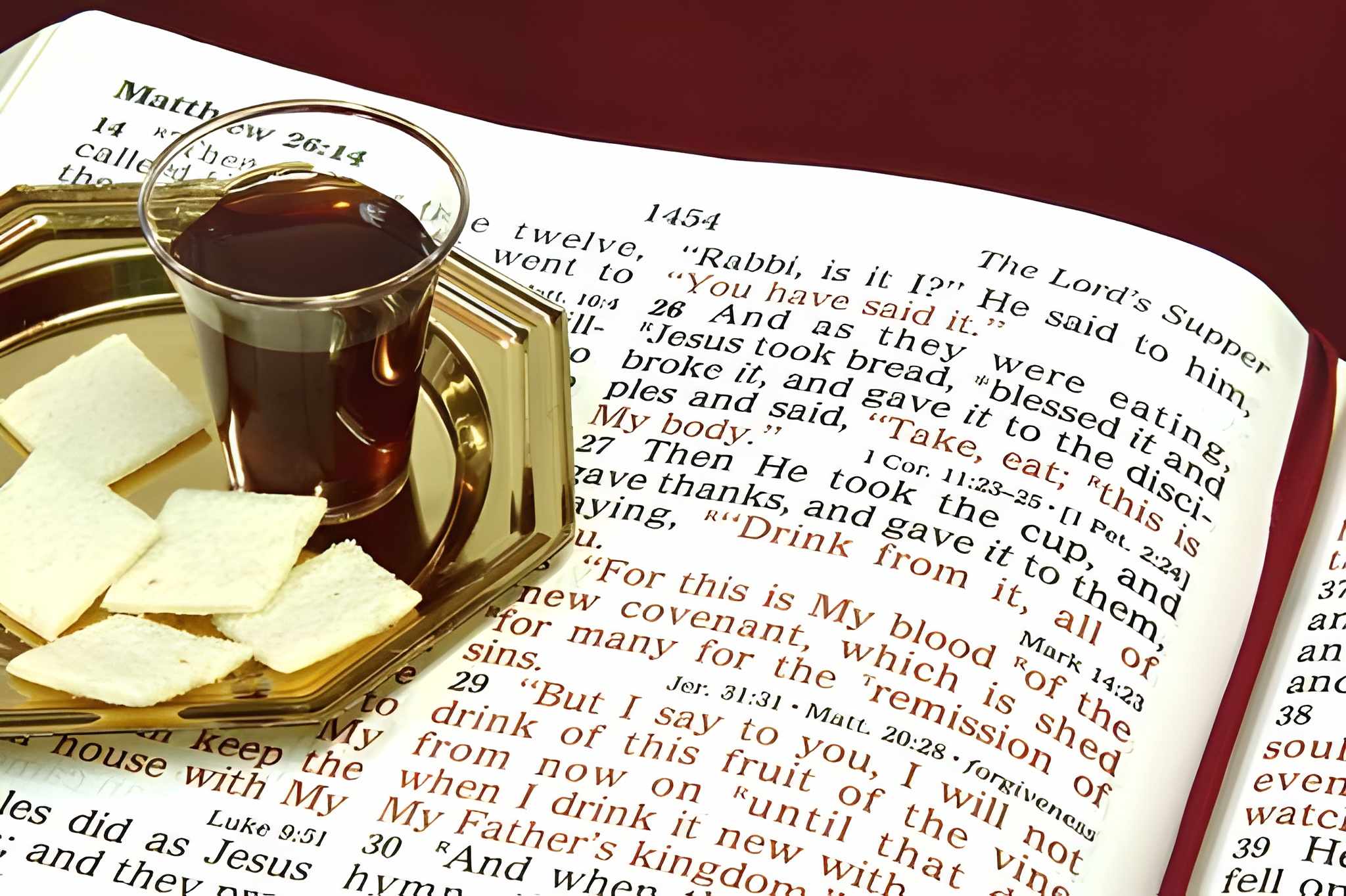
When Jesus broke bread with His disciples hours before His crucifixion and said, “Do this in remembrance of me,” He wasn’t simply asking them to think fondly about Him after He was gone.
He was instituting something far deeper, far more profound, and far more mysterious than a memory exercise.
The Greek word translated “remembrance” is anamnesis, which carries meanings that our English word barely captures.
Jesus was commanding His followers to participate in an active, liturgical memorial that would make His sacrifice present across all generations.
This wasn’t about nostalgia.
It was about making participants in His death and resurrection.
The Historical Context: Passover And the Last Supper
Jesus Transforms An Ancient Memorial
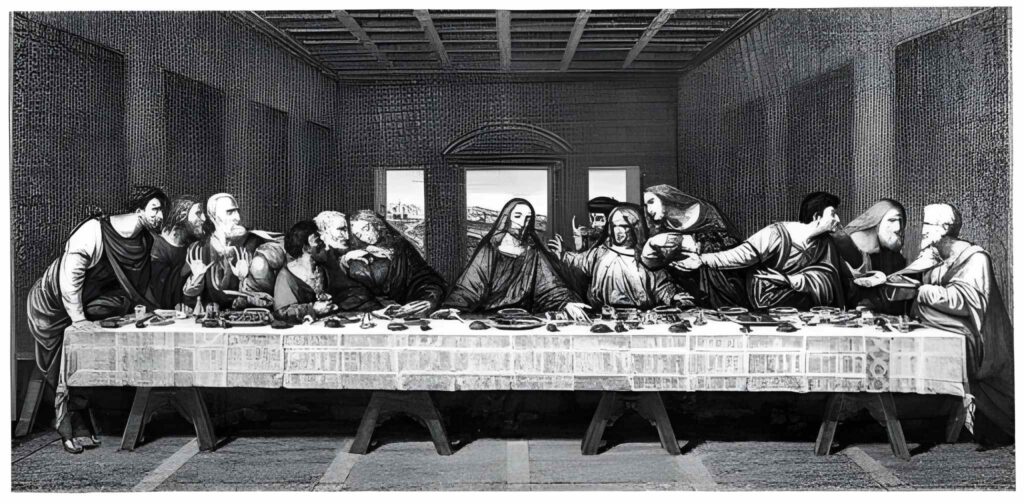
The Last Supper took place during the Passover festival, Israel’s most significant annual celebration.
For over fourteen hundred years, Jews had gathered to commemorate God’s deliverance from Egyptian slavery through the tenth plague—the death of every firstborn son in Egypt.
God had commanded each Israelite household to sacrifice an unblemished lamb and paint its blood on their doorposts.
When the Lord saw the blood, He would “pass over” that house, sparing the firstborn from death.
The Passover meal wasn’t just a history lesson.
It was a memorial feast where participants symbolically reenacted the original event.
Jewish families ate the roasted lamb, unleavened bread, and bitter herbs while recounting the story of the Exodus as if they themselves were escaping Egypt.
The Passover liturgy required speaking in the present tense—”God freed us from bondage”—not “God freed our ancestors.”
The Lamb Without Blemish
Exodus 12:5 specified that the Passover lamb must be “without blemish”—no defects, no injuries, no imperfections.
On the tenth day of Nisan, families would select their lamb and bring it into their homes.
For four days, they would care for it, watch it, examine it to ensure it met God’s standard.
On the fourteenth day of Nisan, at twilight, they would sacrifice it.
The timing is crucial.
Jesus entered Jerusalem on the tenth day of Nisan—the same day Passover lambs were selected.
For four days, He was examined by religious leaders, questioned, tested, and scrutinized.
They found no fault in Him.
On the fourteenth of Nisan, at the exact time Passover lambs were being slaughtered in the Temple, Jesus was crucified.
John the Baptist had declared it plainly three years earlier: “Behold, the Lamb of God, who takes away the sin of the world!” (John 1:29).
Jesus was the fulfillment of every Passover lamb ever sacrificed.
What “Remembrance” Actually Means In Greek
Anamnesis: More Than Memory
The English word “remembrance” suggests passive recollection—thinking back on something that happened.
But the Greek word Jesus used, anamnesis (ἀνάμνησις), means something far more active.
Anamnesis comes from the prefix ana- (again, back) and mimnēskō (to recall, to remember).
It’s not merely bringing something to mind.
It’s a “re-calling” that makes the past event present and active in the here and now.
In Jewish liturgical thought, anamnesis carried sacrificial overtones.
When Moses instructed Israel about their burnt offerings and peace offerings, he said these would serve as an anamnesis before God (Numbers 10:10 in the Septuagint).
The author of Hebrews writes that Old Testament sacrifices were an anamnesis of sin year after year (Hebrews 10:3).
This wasn’t just memory.
It was making something present before God.
God’s Remembrance, Not Just Ours
Here’s what most Christians miss: when Jesus said “do this in anamnesis of me,” He wasn’t primarily talking about our remembering Him.
He was talking about presenting His sacrifice as a memorial before God.
In Acts 10:4, when Peter told Cornelius that his prayers and alms had “ascended as a memorial before God,” he used the same word—anamnesis.
The rainbow in Genesis 9 serves as God’s covenant sign.
When God sees the rainbow, He “remembers” His promise never to flood the earth again.
The sign reminds God, not just us.
Similarly, when the Church celebrates the Lord’s Supper, we’re not just privately reminiscing about Jesus.
We’re presenting Christ’s sacrifice as a covenant memorial before the Father, who sees the sign and blesses us with its benefits.
The memorial is objective, not merely subjective.
Active Participation, Not Passive Observation
Anamnesis also implies active participation.
It’s not passive remembering but deliberate, willful re-engagement with the reality being recalled.
When Israel celebrated Passover, they weren’t spectators watching a historical documentary.
They were participants entering into the Exodus event itself.
The Passover liturgy required children to ask, “Why is this night different from all other nights?”
Parents would answer by explaining God’s deliverance as though it were happening in that moment.
The past became present through ritual reenactment.
When Christians observe the Lord’s Supper, they’re doing something similar.
They’re not merely thinking about Jesus dying two thousand years ago.
They’re entering into His death and resurrection, receiving its power and benefits in real time.
Paul writes, “For as often as you eat this bread and drink the cup, you proclaim the Lord’s death until he comes” (1 Corinthians 11:26).
This proclamation isn’t just verbal.
It’s enacted, sacramental, participatory.
Jesus’ Words At The Last Supper
“This Is My Body Given For You”
And he took bread, and when he had given thanks, he broke it and gave it to them, saying, “This is my body, which is given for you. Do this in remembrance of me.”
Luke 22:19 (ESV)
Jesus takes familiar Passover elements—bread and wine—and invests them with radically new meaning.
The bread now represents His body.
Not merely a symbol or reminder, but His actual body “given for you.”
The Greek word didomi (“given”) is the same word used elsewhere for sacrifice.
Mark 10:45 says the Son of Man came “to give his life as a ransom for many.”
Jesus speaks in the present tense: “my body which is given for you.”
Not “will be given tomorrow on the cross,” but is given right now at this table.
This suggests that what Jesus does at the Last Supper is inseparable from what He does on the cross.
The meal and the sacrifice are bound together.
“This Cup Is The New Covenant In My Blood”
And likewise the cup after they had eaten, saying, “This cup that is poured out for you is the new covenant in my blood.”
Luke 22:20 (ESV)
The cup represents the new covenant sealed by Jesus’ blood.
This language echoes Exodus 24:8, where Moses ratified the Sinai covenant by sprinkling sacrificial blood on the people, declaring, “Behold the blood of the covenant that the LORD has made with you.”
If the Sinai covenant required blood sacrifice, then the new covenant does too.
Jesus is positioning His death as the ratifying sacrifice for God’s new covenant with humanity.
The Passover lamb’s blood saved Israel’s firstborn from physical death.
Jesus’ blood saves believers from eternal death.
The Passover marked Israel’s exodus from Egyptian slavery.
Jesus’ death marks our exodus from slavery to sin.
When Jesus says “poured out for you,” He’s using sacrificial language.
Leviticus 4:7 describes priests pouring sacrificial blood at the base of the altar.
Jesus is presenting His death as an atoning sacrifice.
“Do This”
The command “do this” (touto poieite in Greek) is significant.
The verb poieō means “to do, to make, to accomplish, to bring about.”
In context, it means to continue this ritual action.
Break bread.
Give thanks.
Distribute it to one another.
Drink the cup together.
This isn’t a one-time event.
It’s an ongoing practice for the community of believers.
Paul confirms this in 1 Corinthians 11:25: “Do this, as often as you drink it, in remembrance of me.”
The early church understood this as a regular practice.
Acts 20:7 records that believers gathered “on the first day of the week” to break bread.
The Lord’s Supper became central to Christian worship from the very beginning.
Why Jesus Chose Passover To Institute This Memorial
Passover Was Already A Memorial
Passover itself was a memorial feast.
God commanded Israel in Exodus 12:14: “This day shall be for you a memorial day, and you shall keep it as a feast to the LORD; throughout your generations, as a statute forever, you shall keep it.”
The word “memorial” in Hebrew is zikkaron, which like anamnesis in Greek, means more than passive remembering.
It means active commemoration that makes the past event present.
Every Passover, Jewish families would reenact the original Passover night.
They would tell the story, eat the prescribed foods, and pass the tradition to the next generation.
The memorial kept the Exodus alive in Israel’s collective consciousness.
Jesus takes this existing memorial structure and transforms it.
The old memorial pointed backward to physical deliverance from Egypt.
The new memorial points to spiritual deliverance from sin and death through Jesus’ sacrifice.
Jesus Fulfills What Passover Foreshadowed
Paul makes this explicit in 1 Corinthians 5:7: “For Christ, our Passover lamb, has been sacrificed.”
The original Passover lamb was a shadow.
Jesus is the substance.
The original lamb saved Israel’s firstborn from physical death.
Jesus saves believers from eternal death.
The original lamb’s blood on doorposts marked God’s people.
Jesus’ blood applied to hearts marks God’s people.
The original Passover marked Israel’s birth as a nation.
Jesus’ death marked the Church’s birth as God’s new covenant people.
Colossians 2:17 says the Old Testament observances “are a shadow of the things to come, but the substance belongs to Christ.”
Hebrews 10:1 adds that the law has “a shadow of the good things to come instead of the true form of these realities.”
Passover was the shadow.
Jesus’ death and the Lord’s Supper are the reality.
The New Exodus
The prophets foretold that God’s ultimate work of redemption would be a “new exodus.”
Isaiah 52:11-12 uses exodus language to describe Israel’s return from Babylonian exile: “Depart, depart, go out from there… For the LORD will go before you, and the God of Israel will be your rear guard.”
This echoed God’s presence with Israel during the original exodus.
When the Gospels open, they deliberately draw parallels between Jesus and Moses.
Jesus goes down to Egypt as a child and returns (Matthew 2:15), fulfilling Hosea 11:1: “Out of Egypt I called my son.”
Herod’s slaughter of infants echoes Pharaoh’s decree to kill Hebrew baby boys.
Jesus spends forty days in the wilderness, mirroring Israel’s forty years.
Luke 9:31 records that at the Transfiguration, Moses and Elijah spoke with Jesus about His “exodus” (exodos in Greek) that He would accomplish in Jerusalem.
Jesus’ death wasn’t merely a crucifixion.
It was an exodus—a departure from death to life, a liberation from bondage to sin.
The Last Supper, held during Passover, connected Jesus’ death to this exodus theme.
He was leading God’s people out of slavery into freedom.
The Theological Significance For Christians Today
Proclaiming Christ’s Death Until He Comes
Paul writes, “For as often as you eat this bread and drink the cup, you proclaim the Lord’s death until he comes” (1 Corinthians 11:26).
The Lord’s Supper is proclamation.
Not just spoken proclamation, but enacted, visible, tangible proclamation.
When believers gather around the table, break bread, and share the cup, they’re declaring to the world: Jesus died for sinners.
His body was broken.
His blood was shed.
And this sacrifice is sufficient for our salvation.
This proclamation has a forward-looking dimension: “until he comes.”
The Lord’s Supper isn’t just about past and present.
It points to the future.
It anticipates the great wedding feast of the Lamb described in Revelation 19:9.
Jesus Himself said at the Last Supper, “I tell you I will not drink again of this fruit of the vine until that day when I drink it new with you in my Father’s kingdom” (Matthew 26:29).
Every celebration of the Lord’s Supper is a foretaste of that coming banquet.
Examining Ourselves Before Participating
Paul warns the Corinthians about taking the Lord’s Supper in an unworthy manner (1 Corinthians 11:27-29).
He’s not saying we must be perfect to participate.
None of us are worthy.
He’s saying we must participate with proper reverence, understanding what we’re doing.
“Let a person examine himself, then, and so eat of the bread and drink of the cup” (1 Corinthians 11:28).
Self-examination means recognizing our sin.
It means confessing our need for Christ’s sacrifice.
It means discerning that this meal represents Jesus’ body and blood, not treating it as ordinary food.
Paul says those who eat and drink “without discerning the body” bring judgment on themselves.
Some in Corinth had become sick, and some had died because they treated the Lord’s Supper carelessly.
This isn’t a meal to approach casually.
It’s sacred, set apart, holy.
United As One Body
The Lord’s Supper unites believers not just with Christ but with each other.
Paul writes, “Because there is one bread, we who are many are one body, for we all partake of the one bread” (1 Corinthians 10:17).
When Christians from different backgrounds, different cultures, different economic classes gather around the same table and share the same bread and cup, they’re declaring their unity in Christ.
Social divisions dissolve.
Economic barriers fall.
Ethnic distinctions become irrelevant.
All are equal at the Lord’s table because all equally depend on Christ’s sacrifice.
This was part of Paul’s rebuke to the Corinthians.
They were treating the Lord’s Supper as a private meal where the wealthy ate lavishly while the poor went hungry (1 Corinthians 11:20-22).
This violated the very meaning of the meal.
The Lord’s Supper is communal.
It’s corporate.
It’s the family of God gathering at the Father’s table.
Feeding On Christ By Faith
The Lord’s Supper is spiritual nourishment.
Just as bread and wine sustain physical life, Christ’s body and blood sustain spiritual life.
Jesus said in John 6:53-56, “Truly, truly, I say to you, unless you eat the flesh of the Son of Man and drink his blood, you have no life in you. Whoever feeds on my flesh and drinks my blood has eternal life, and I will raise him up on the last day. For my flesh is true food, and my blood is true drink. Whoever feeds on my flesh and drinks my blood abides in me, and I in him.”
This teaching scandalized many listeners.
They took it literally and were offended.
But Jesus wasn’t advocating cannibalism.
He was using vivid language to describe spiritual reality.
To “eat his flesh and drink his blood” means to receive Him by faith, to depend utterly on His sacrifice, to internalize His life into your own.
The Lord’s Supper is the visible expression of this invisible reality.
When believers eat the bread and drink the cup, they’re saying, “I depend on Jesus alone for life.”
They’re receiving spiritual nourishment through faith in His finished work.
Common Misunderstandings About The Lord’s Supper
It’s Not Merely Symbolic
Some Christians treat the Lord’s Supper as purely symbolic—a memory aid with no real spiritual significance.
They see it as a nice tradition but nothing more.
This empties Jesus’ words of their power.
If Jesus wanted us merely to remember Him mentally, He could have said, “Think about me from time to time.”
But He didn’t.
He instituted a meal, a ritual, a repeated action involving physical elements.
He said, “This is my body,” not “This represents my body.”
Different Christian traditions disagree on exactly how Christ is present in the bread and wine.
Catholics believe in transubstantiation—the bread and wine become Christ’s actual body and blood.
Lutherans believe in consubstantiation—Christ is present in, with, and under the elements.
Reformed Christians believe in a spiritual real presence—Christ is truly present, but spiritually, not physically.
Baptists and evangelicals often see it as a memorial emphasizing remembrance.
But even in traditions that emphasize the memorial aspect, the Lord’s Supper is more than mere symbolism.
It’s a means of grace.
God meets His people at this table in a special way.
It’s Not A Re-Sacrifice Of Christ
Some wrongly think that the Lord’s Supper re-sacrifices Jesus or repeats His atoning death.
This contradicts Scripture.
Hebrews 10:10 declares, “We have been sanctified through the offering of the body of Jesus Christ once for all.”
Verse 12 adds, “But when Christ had offered for all time a single sacrifice for sins, he sat down at the right hand of God.”
Jesus’ sacrifice was “once for all.”
It doesn’t need repeating.
It can’t be repeated.
It’s finished.
What the Lord’s Supper does is make that one sacrifice present to us across time.
It applies the benefits of Christ’s death to believers who participate by faith.
It’s not a new sacrifice.
It’s a participation in the one sacrifice that Jesus accomplished on the cross.
It’s Not Magic Or Automatic
Simply eating bread and drinking wine doesn’t automatically convey grace.
The elements aren’t magical.
Paul warns that people can eat and drink judgment on themselves if they participate without faith, without repentance, without discerning what the meal represents.
The Lord’s Supper requires faith.
It requires a heart that recognizes sin and clings to Christ for forgiveness.
It requires love for fellow believers and unity in the body of Christ.
Without these, the meal becomes empty ritual at best, profanity at worst.
Frequently Asked Questions
How often should Christians observe the Lord’s Supper?
Jesus said “as often as you drink it,” without specifying a frequency. The early church in Acts 20:7 gathered on the first day of the week to break bread, suggesting weekly observance. Some churches celebrate it weekly, others monthly or quarterly. What matters most isn’t the frequency but the reverence and understanding with which believers approach it. Paul’s emphasis is on regular, repeated observance—not once or twice in a lifetime, but as an ongoing practice of the Christian community.
Can children participate in the Lord’s Supper?
This varies by tradition. Some churches practice paedo-communion, allowing baptized children to participate from infancy. Others require children to reach an age where they can examine themselves and understand what the meal represents, often tied to confirmation or profession of faith. The key biblical principle is that participants should be able to “discern the body” (1 Corinthians 11:29) and examine themselves (verse 28). Parents and church leaders must prayerfully determine when a child demonstrates sufficient understanding and genuine faith to participate meaningfully.
Does the Lord’s Supper forgive sins?
The Lord’s Supper doesn’t mechanically forgive sins in the way baptism doesn’t mechanically save. Both are means of grace—God uses them to strengthen faith, assure believers of forgiveness, and apply Christ’s work to our lives. Jesus’ blood shed on the cross accomplishes forgiveness. The Lord’s Supper assures us of that forgiveness and allows us to receive its benefits through faith. It’s not that the bread and wine themselves forgive, but that God meets us in this meal and applies Christ’s sacrifice to our hearts when we participate with genuine repentance and faith.
What about Christians who disagree on how Christ is present in the elements?
Christians have debated this for centuries. While the disagreements are real and significant theologically, they shouldn’t divide believers who hold firmly to the core truths: that Jesus commanded this observance, that He is truly present when His people gather in His name, that His sacrifice on the cross is the only basis for salvation, and that participating by faith brings spiritual blessing. The mystery of how Christ is present may exceed our ability to fully comprehend or explain. What matters most is obeying Jesus’ command, examining our hearts, and receiving Him in faith.
Why do some churches use wine and others grape juice?
Scripture refers to “the fruit of the vine” and “the cup,” indicating something derived from grapes. Early Christians used wine, as that’s what would have been used at Passover. The shift to grape juice in some Protestant churches came in the 19th century, driven partly by the temperance movement’s concerns about alcohol. Those who use wine argue for maintaining the biblical and historical practice. Those who use grape juice emphasize that the substance matters less than the meaning, and that grape juice avoids potential stumbling blocks for those struggling with alcoholism. Both can be done faithfully; what matters is the heart of the participants and their focus on Christ’s sacrifice.
Sources
Augustine. City of God, Book 10. [Classic Patristic Work]
Catechism of the Catholic Church, nos. 1103, 1337, 1354, 1363, 1365-1366. (1994). [Catholic Catechism]
Council of Trent. (1551). Decree Concerning the Most Holy Sacrament of the Eucharist. [Conciliar Document]
Grudem, W. (1994). Systematic Theology: An Introduction to Biblical Doctrine (pp. 987-1005). Zondervan. [Systematic Theology]
Horton, M. (2011). The Christian Faith: A Systematic Theology for Pilgrims on the Way (pp. 769-792). Zondervan. [Systematic Theology]
Jeremias, J. (1966). The Eucharistic Words of Jesus. SCM Press. [Biblical Scholarship]
New Jerome Biblical Commentary. (1990). Brown, R. E., Fitzmyer, J. A., & Murphy, R. E. (Eds.). Prentice Hall. [Biblical Commentary]
Piper, J. (2006). Why and How We Celebrate the Lord’s Supper. Desiring God. [Theological Article]
Sanchez, A. (2019). How We’ve Misunderstood “Do This in Remembrance of Me.” Core Christianity. [Theological Article]
Schmemann, A. (1987). The Eucharist: Sacrament of the Kingdom. St. Vladimir’s Seminary Press. [Eastern Orthodox Theology]
Stice, R. (2024). The Anamnesis in the Eucharistic Prayer. East Tennessee Catholic. [Liturgical Theology]
Wellum, S. (2016). God the Son Incarnate: The Doctrine of Christ (pp. 543-568). Crossway. [Christology]
Westminster Confession of Faith, Chapter 29. (1646). [Reformed Confession]
Wright, N. T. (1996). Jesus and the Victory of God (pp. 554-563). Fortress Press. [Historical Jesus Study]