

Anger feels justified in the moment.
Your spouse said something cutting. Your coworker took credit for your work. Someone cut you off in traffic. A friend betrayed your confidence.
The feeling rushes through your body like fire, demanding immediate expression and prolonged attention.
Scripture never says you shouldn’t feel angry.
In fact, God Himself expresses anger throughout the Bible.
Jesus overturned tables in righteous fury at the temple.
But the Bible does give a very specific warning about what we do with anger.
“In your anger do not sin: Do not let the sun go down while you are still angry.”
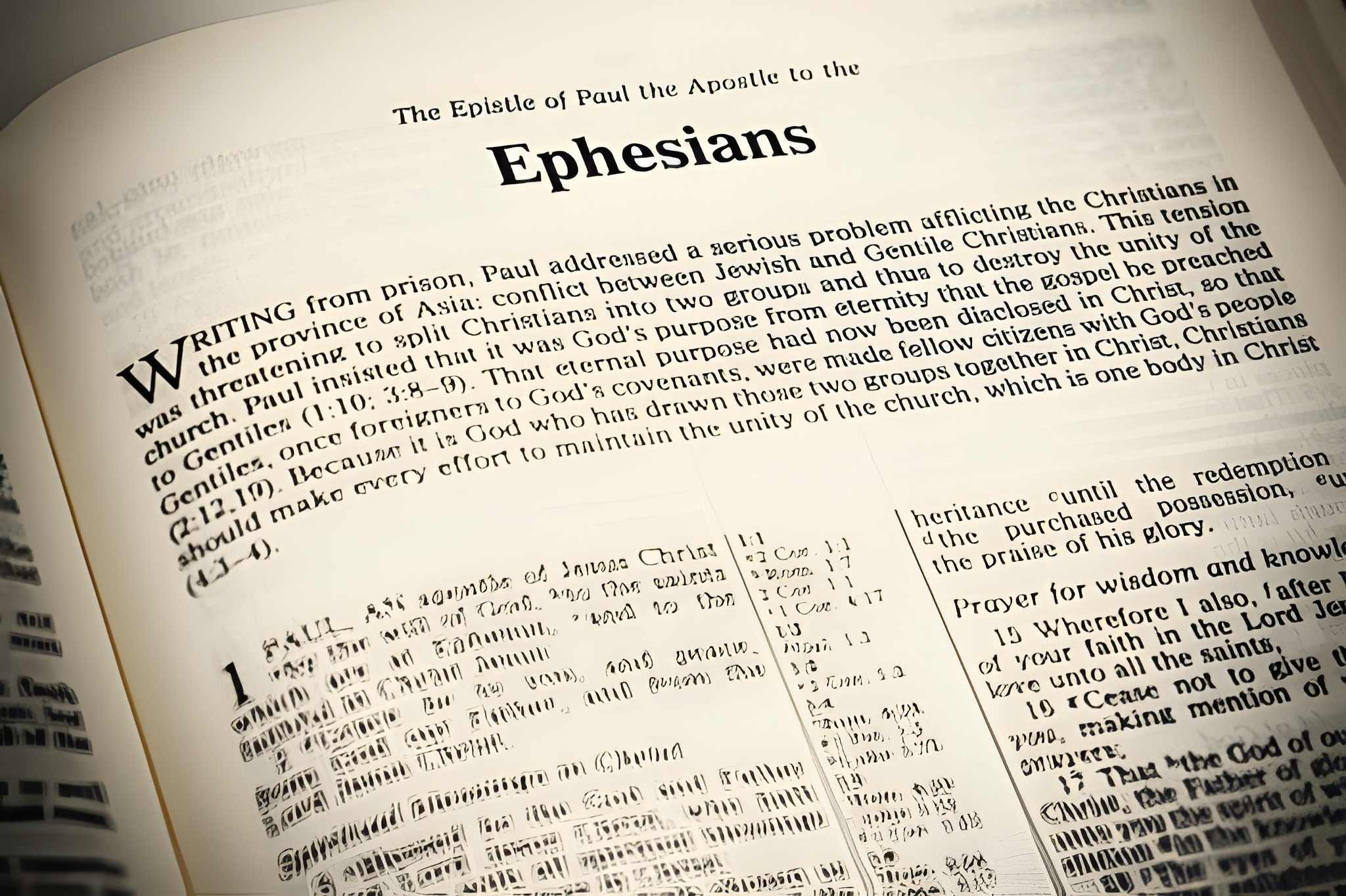
Ephesians 4:26 (NIV)
This verse contains one of Scripture’s most practical commands about emotional control.
It acknowledges that anger will happen, sets a boundary for how we handle it, and establishes a time limit for its resolution.
Understanding this verse can transform how you process conflict, protect your relationships, and guard your spiritual health.
The Permission to Be Angry
Paul begins with a surprising statement: “Be angry.” The ESV translates it, “Be angry and do not sin.” The NASB reads, “BE ANGRY, AND yet DO NOT SIN.” The Amplified Bible expands it: “BE ANGRY [at sin—at immorality, at injustice, at ungodly behavior], YET DO NOT SIN.”
This isn’t permission to indulge every irritation.
It’s recognition that anger is a natural human emotion that serves a legitimate purpose.
Anger alerts us that something is wrong.
It energizes us to address injustice. It signals that a boundary has been violated or a value has been threatened.
God expresses anger at sin, injustice, and rebellion throughout Scripture.
Exodus 4:14 records that “the Lord’s anger burned against Moses.”
Mark 3:5 describes Jesus looking at the Pharisees “with anger” at their hard hearts. God’s anger is always righteous, always controlled, always purposeful.
The problem isn’t feeling angry. The problem is what we do when anger arrives.
Most of us either suppress anger until it explodes, or we express it immediately in destructive ways.
Paul offers a third option: feel the anger, but don’t let it control you into sin.
The Prohibition Against Sinful Anger
The second part of the command provides the crucial boundary: “do not sin.” The MSG translation captures this vividly: “Go ahead and be angry.
You do well to be angry—but don’t use your anger as fuel for revenge.”
Anger becomes sinful when it leads to specific actions.
These include verbal attacks that tear down rather than build up, physical violence or intimidation, plotting revenge, rehearsing offenses repeatedly, spreading gossip about the person who angered you, withdrawing love and affection as punishment, or allowing bitterness to take root.
James 1:20 explains why: “The anger of man does not produce the righteousness of God” (ESV).
Your anger, no matter how justified it feels, will not accomplish God’s purposes if expressed sinfully.
Proverbs 29:11 warns, “A fool gives full vent to his spirit, but a wise man quietly holds it back” (ESV).
The difference between righteous and sinful anger often comes down to focus.
Righteous anger focuses on genuine injustice, wrong done to others, or God’s glory being attacked.
Sinful anger usually focuses on personal offense, wounded pride, or threats to our comfort and control.
Jesus demonstrated righteous anger when He cleansed the temple.
He was angry because God’s house had become a marketplace exploiting the poor and hindering worship.
He wasn’t angry because someone insulted Him or inconvenienced Him. In fact, when personally attacked, “he did not retaliate” and “made no threats.
Instead, he entrusted himself to him who judges justly” (1 Peter 2:23, NIV).
The Time Limit for Anger
Paul then adds a specific time constraint: “Do not let the sun go down while you are still angry” (NIV). The NLT puts it, “Don’t let the sun go down while you are still angry.” The CEB says, “Don’t let the sun set on your anger.”
This isn’t a legalistic rule requiring you to resolve all conflicts before midnight.
The sun going down is imagery for not letting time pass while anger festers.
The NRSV translates verse 27, “and do not make room for the devil.”
The longer anger sits unaddressed, the more opportunity you give Satan to turn it into something destructive.
Unresolved anger doesn’t disappear overnight. It ferments. It grows.
It spreads like an infection through your thoughts, your attitudes, your other relationships.
What started as legitimate frustration morphs into bitterness, resentment, and hatred.
Psalm 4:4, which Paul likely quotes here, says, “In your anger do not sin; when you are on your beds, search your hearts and be silent” (NIV).
The psalmist connects evening reflection with dealing with anger.
Before you sleep, before another day passes, address what’s stirring in your heart.
This time limit serves multiple purposes.
First, it prevents anger from becoming a permanent resident in your heart.
Second, it forces you to deal with issues promptly rather than avoiding them.
Third, it protects relationships from the cumulative damage of unresolved offenses.
Fourth, it keeps you from rehearsing the offense repeatedly, which intensifies rather than resolves anger.
The Connection to Satan’s Strategy
Verse 27 reveals why the time limit matters: “and do not give the devil a foothold” (NIV). The NKJV says “nor give place to the devil.” The ESV translates it “give no opportunity to the devil.”
The Greek word for “foothold” or “place” is topos, which literally means a place, space, or opportunity.
Unresolved anger creates space in your life where Satan can work.
It gives him a staging ground, a base of operations, a place to launch attacks against you and those around you.
Satan loves unresolved anger because it makes you vulnerable to multiple temptations.
You become vulnerable to bitterness, which Hebrews 12:15 warns “causes trouble and defiles many.”
You become vulnerable to division, breaking fellowship with other believers.
You become vulnerable to sin, as anger clouds judgment and weakens self-control.
The longer anger remains unresolved, the larger Satan’s foothold grows. What started as legitimate frustration becomes an obsession.
You replay the offense constantly. You imagine confrontations. You build a case against the other person. You recruit allies to validate your perspective.
Satan uses your anger to isolate you, poison your relationships, and derail your spiritual growth.
Practical Steps for Controlling Anger
Scripture provides specific guidance for managing anger righteously.
Pray before you speak. Psalm 4:4 instructs, “In your anger do not sin; when you are on your beds, search your hearts and be silent.” Before confronting the issue, bring it to God. Ask Him to search your heart for pride, selfishness, or misunderstanding.
Address issues quickly. Don’t wait until anger has built into rage. Matthew 5:23-24 instructs that if your brother has something against you, “leave your gift there in front of the altar. First go and be reconciled to your brother” (NIV). Deal with relational issues promptly.
Control your words. Proverbs 15:1 promises, “A gentle answer turns away wrath, but a harsh word stirs up anger” (NIV). Ephesians 4:29 commands, “Do not let any unwholesome talk come out of your mouths, but only what is helpful for building others up according to their needs” (NIV).
Confess when your anger becomes sinful. First John 1:9 assures us, “If we confess our sins, he is faithful and just and will forgive us our sins” (NIV). Don’t rationalize sinful expressions of anger. Acknowledge them, confess them, and make them right.
Pursue peace actively. Romans 12:18 instructs, “If it is possible, as far as it depends on you, live at peace with everyone” (NIV). Sometimes reconciliation isn’t possible because the other person refuses. But you’re responsible for your part.
Forgive as you’ve been forgiven. Ephesians 4:32, just a few verses later, commands, “Be kind and compassionate to one another, forgiving each other, just as in Christ God forgave you” (NIV). The measure of God’s forgiveness toward you should determine your forgiveness toward others.
Frequently Asked Questions
Does “don’t let the sun go down on your anger” mean I must resolve conflicts before bedtime?
The principle is about promptness, not a literal 24-hour deadline. Some conflicts require time to cool down before productive conversation can happen. The warning is against letting anger fester for days, weeks, or years. Address issues as soon as wisdom permits, but don’t force premature resolution just to meet a deadline.
What if the other person refuses to reconcile?
You’re responsible for your part, not their response. Romans 12:18 says “if it is possible, as far as it depends on you.” Sometimes reconciliation isn’t possible because the other person won’t engage. You can still release your anger, forgive from your heart, and refuse to let bitterness take root even if the relationship isn’t restored.
Is all anger sinful?
No. God expresses anger, and Jesus demonstrated anger at injustice. Righteous anger focuses on wrong done to others or God’s glory being attacked, not personal offense. It’s controlled, purposeful, and doesn’t lead to sinful behavior. Most of our anger is sinful because it’s self-focused and expressed destructively.
How do I know if I’m giving Satan a foothold through anger?
Warning signs include: rehearsing offenses constantly, recruiting others to validate your perspective, imagining revenge scenarios, withdrawing from Christian fellowship, justifying ongoing bitterness, or allowing anger to dominate your thoughts. If anger is controlling you rather than you controlling anger, Satan has gained a foothold.
What if I can’t stop feeling angry even after trying to resolve it?
Persistent anger often signals deeper issues. You may need to explore whether pride, unforgiveness, or unrealistic expectations are fueling the anger. Sometimes professional Christian counseling helps identify root causes. Continue bringing the anger to God in prayer, asking Him to search your heart and transform your perspective.
Prayer for Self-Control in Anger
Heavenly Father, forgive me for times I’ve let anger control me instead of controlling anger. Thank You for acknowledging that I’ll feel angry, but for setting boundaries on how I express it. Help me distinguish between righteous anger at injustice and selfish anger at personal offense. Give me wisdom to address conflicts promptly without letting anger fester. Protect me from giving Satan a foothold through unresolved bitterness. Teach me to be slow to anger and quick to forgive. Transform my heart to reflect Your patience and grace. When wronged, help me trust Your justice rather than seeking my own revenge. In Jesus’ name, Amen.
Works Cited
BibleRef.com. (n.d.). What does Ephesians 4:26 mean? [Biblical commentary]
Bible Study Tools. (n.d.). Ephesians 4:26 – In your anger do not sin. [Verse exposition]
Christian Counseling & Educational Foundation. (n.d.). Be angry and do not sin: Exploring Ephesians 4:26-27. [Theological study]
Daily Verses. (n.d.). Ephesians 4:26-27. [Scripture collection]
GotQuestions.org. (2018). What does it mean to not let the sun go down on your anger? [Doctrinal study]
King James Bible Online. (n.d.). Ephesians 4:26. [Verse text]
New International Version. (2011). Ephesians 4:26. Biblica. [Bible translation]
New King James Version. (1982). Ephesians 4:26. Thomas Nelson. [Bible translation]
Powlison, D. (n.d.). Good and angry: Redeeming anger, irritation, complaining, and bitterness. New Growth Press. [Christian living]
Welch, E. (n.d.). Be angry and do not sin. Journal of Biblical Counseling, 30(2), 45-58. [Counseling article]

