

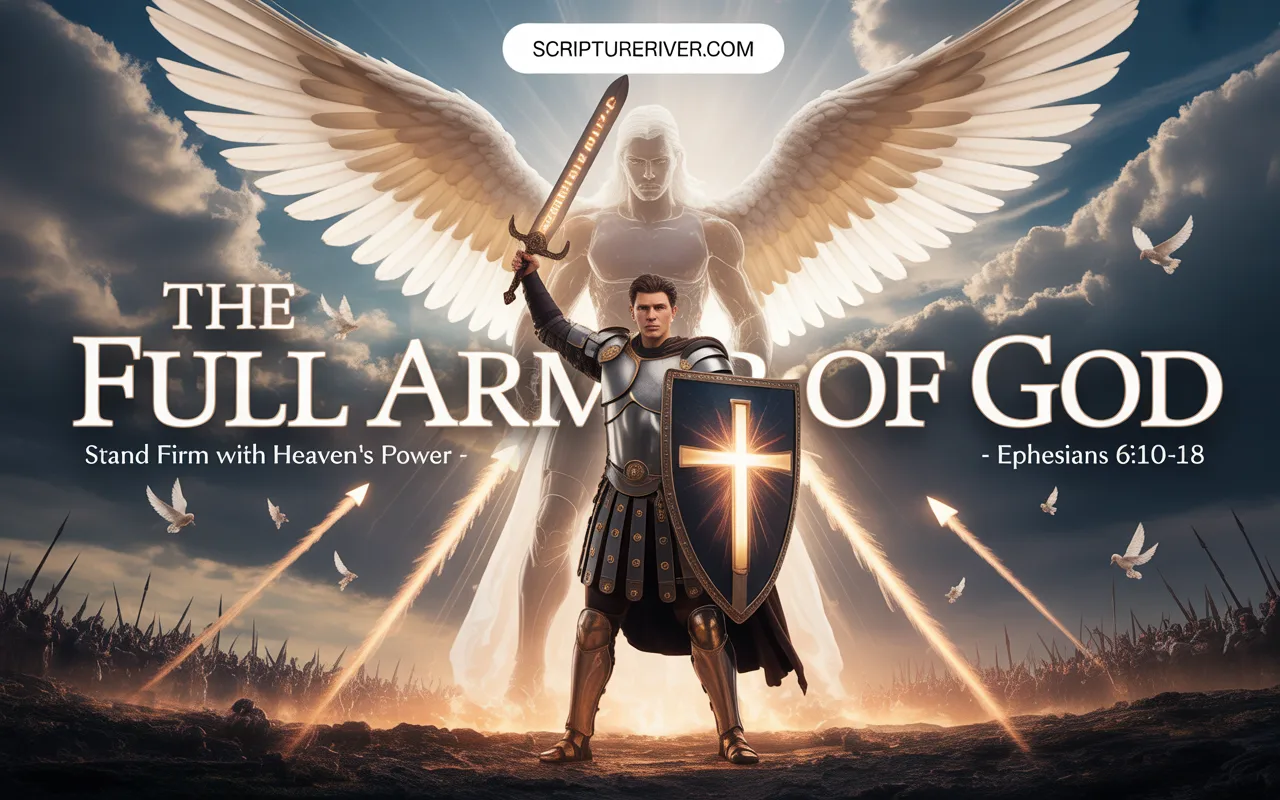
You’re in a war whether you acknowledge it or not.
The enemy doesn’t care if you believe in spiritual warfare.
He doesn’t wait for you to feel ready. He doesn’t attack only when you’re spiritually strong.
He strikes when you’re vulnerable, distracted, and unprepared.
That’s why Paul’s instructions in Ephesians 6:10-18 about the armor of God aren’t optional suggestions for super-spiritual Christians.
They’re survival instructions for every believer facing an enemy who “prowls around like a roaring lion looking for someone to devour” (1 Peter 5:8).
Most Christians know the armor of God passage.
We’ve seen the illustrations with Roman soldiers. We’ve heard sermons listing the six pieces.
But knowing about the armor and actually putting it on daily are completely different things.
Understanding what each piece of armor represents biblically and how to practically apply it determines whether you stand firm when spiritual attacks come or whether you fall repeatedly to the same temptations, doubts, and defeats.
The Reality of Spiritual Warfare
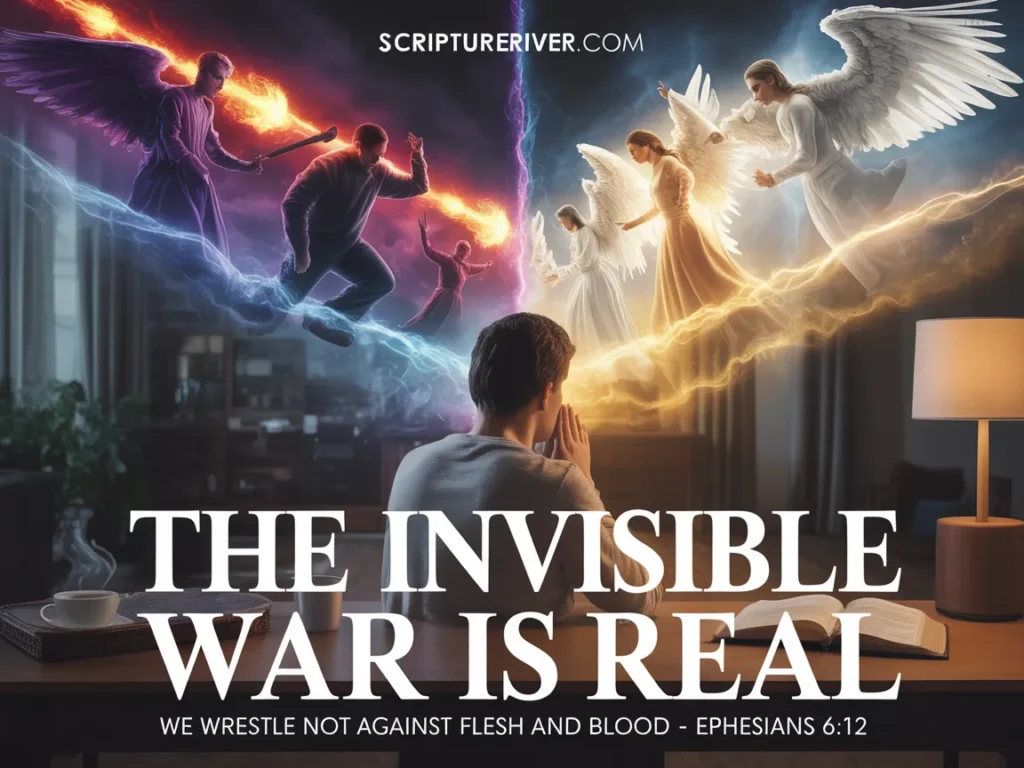
Ephesians 6:12, English Standard Version (ESV)
“For we do not wrestle against flesh and blood, but against the rulers, against the authorities, against the cosmic powers over this present darkness, against the spiritual forces of evil in the heavenly places.”
Paul states plainly that your real enemy isn’t people.
It is spiritual forces organized in hierarchical structure with specific goals: your destruction, your family’s destruction, and the church’s destruction.
What Spiritual Warfare Looks Like
Spiritual warfare isn’t always dramatic. It’s often subtle.
The thought that whispers you’re worthless.
The temptation that returns despite repeated repentance.
The doubt that undermines what you know is true.
The conflict that divides relationships without clear cause.
The exhaustion that keeps you from prayer and Scripture.
According to theologian Clinton Arnold’s research on spiritual warfare in Ephesians, Paul was addressing real spiritual opposition the Ephesian church faced, not speaking metaphorically.
The powers he describes are actual spiritual beings opposed to God’s purposes.
Why You Need Armor
Armor is defensive equipment worn in battle. The fact that God provides armor tells you three things:
You’re in a battle. The enemy will attack. You need protection God provides.
Without armor, you’re vulnerable. The enemy knows where to strike.
He’s been studying human weakness for millennia. He knows your specific vulnerabilities better than you know them yourself.
The Complete Armor of God Described
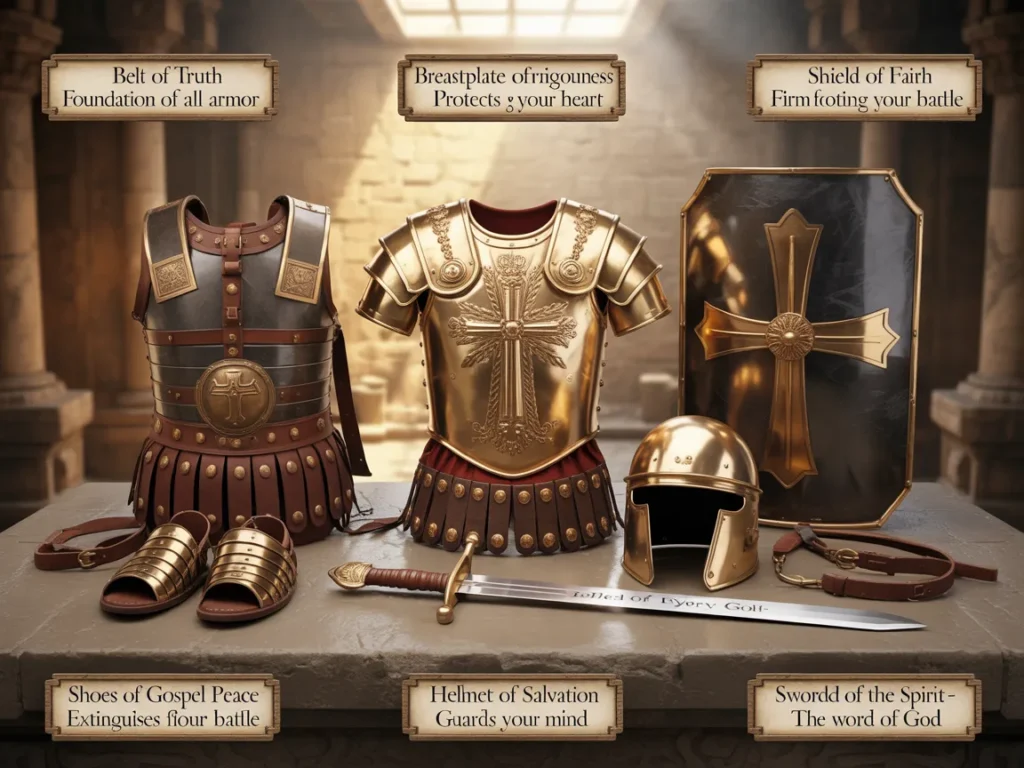
Ephesians 6:13-17, Christian Standard Bible (CSB)
“For this reason take up the full armor of God, so that you may be able to resist in the evil day, and having prepared everything, to take your stand. Stand, therefore, with truth like a belt around your waist, righteousness like armor on your chest, your feet sandaled with readiness for the gospel of peace. In every situation take up the shield of faith with which you can extinguish all the flaming arrows of the evil one. Take the helmet of salvation and the sword of the Spirit—which is the word of God.”
The Belt of Truth
Roman soldiers wore belts that held their tunics in place and supported their weapons. Without the belt, everything else became unstable.
Truth functions the same way spiritually. It’s foundational. Everything else depends on it.
What truth means: Believing and living according to God’s truth revealed in Scripture rather than cultural lies, personal feelings, or the enemy’s deceptions.
How to put it on: Start each day acknowledging what’s true according to Scripture. “God loves me. Jesus died for my sins. I’m forgiven. The enemy is defeated. God’s Word is trustworthy.” Speak truth out loud before lies have opportunity to establish themselves.
I learned this during a season of crushing depression. The lies felt more real than truth. “You’re worthless. God doesn’t care. Nothing will change.”
I started each morning forcing myself to speak Scripture truth out loud whether I felt it or not. “I am fearfully and wonderfully made. God works all things for good. His mercies are new every morning.”
Truth spoken consistently eventually penetrated the darkness.
The Breastplate of Righteousness
The breastplate protected a soldier’s vital organs: heart and lungs. A strike there meant death.
Righteousness protects your spiritual vitals from accusations and condemnation.
What righteousness means: Both Christ’s righteousness credited to you at salvation and practical righteous living that flows from relationship with Him.
How to put it on: Confess sin quickly. Don’t let unconfessed sin create vulnerability the enemy exploits through guilt and shame. Remember you’re clothed in Christ’s righteousness, not depending on your own. When the enemy accuses you, point to Jesus’s finished work.
The Gospel of Peace as Shoes
Roman soldiers wore sturdy sandals that gave firm footing in battle. Slipping meant vulnerability.
The gospel gives you firm footing spiritually. You stand on the sure foundation of what Christ accomplished.
What gospel shoes mean: Being so grounded in the gospel that you don’t slip into works-based thinking, you don’t question your salvation when you fail, and you’re ready to share this good news with others.
How to put them on: Review the gospel daily. Not just at conversion but as ongoing foundation. Remind yourself: saved by grace through faith, not works. Justified by Christ’s blood, not your performance. Secure in God’s love regardless of circumstances.
The Shield of Faith
Roman shields were large enough to cover the entire body. Soldiers could lock shields together creating protective wall.
Faith functions as active defense against the enemy’s attacks, described as “flaming arrows.”
What the shield means: Trusting God’s character, promises, and Word when circumstances, feelings, and the enemy’s lies suggest God isn’t trustworthy.
How to hold it up: When doubt attacks, consciously choose to trust God anyway. When temptation hits, believe God’s way is better than sin’s temporary pleasure. When fear threatens, trust God’s sovereign control.
Faith isn’t passive. It’s active choice to believe God despite contradictory evidence.
The Helmet of Salvation
Helmets protect the head. A blow to the head can kill or disorient completely.
The helmet of salvation protects your mind from attacks on your assurance of salvation and your identity in Christ.
What the helmet means: Confident assurance that you’re saved, you belong to God, and nothing can separate you from His love.
How to put it on: Know what Scripture says about your salvation’s security. When the enemy whispers “You’re not really saved” or “God’s given up on you,” respond with biblical truth about salvation that doesn’t depend on your feelings or performance.
The Sword of the Spirit
This is the only offensive weapon in the armor. Everything else is defensive.
The sword is specifically identified as “the word of God.”
What the sword means: Scripture memorized, understood, and applied as weapon against the enemy’s lies and temptations.
How to wield it: Jesus modeled this in Matthew 4:1-11 when Satan tempted Him. Each temptation was met with “It is written” followed by specific Scripture. Memorize Scripture. When temptation or lies attack, speak God’s Word against them.
Prayer: The Battle Strategy
Ephesians 6:18, New International Version (NIV)
“And pray in the Spirit on all occasions with all kinds of prayers and requests. With this in mind, be alert and always keep on praying for all the Lord’s people.”
Prayer isn’t a piece of armor. It’s how you engage in the battle while wearing the armor.
According to New Testament scholar Peter O’Brien’s commentary on Ephesians, Paul’s instruction to pray “on all occasions” indicates prayer is the atmosphere in which spiritual warfare happens, not a separate activity from wearing armor.
What Praying in the Spirit Means
This doesn’t necessarily mean praying in tongues. It means praying according to the Holy Spirit’s leading, aligned with God’s will, empowered by God’s strength rather than human effort.
Why Constant Prayer Matters
The enemy doesn’t attack on schedule. He strikes when you’re vulnerable.
Maintaining prayerful dependence throughout the day keeps you alert to his schemes and connected to God’s power.
How to Put on the Armor Daily
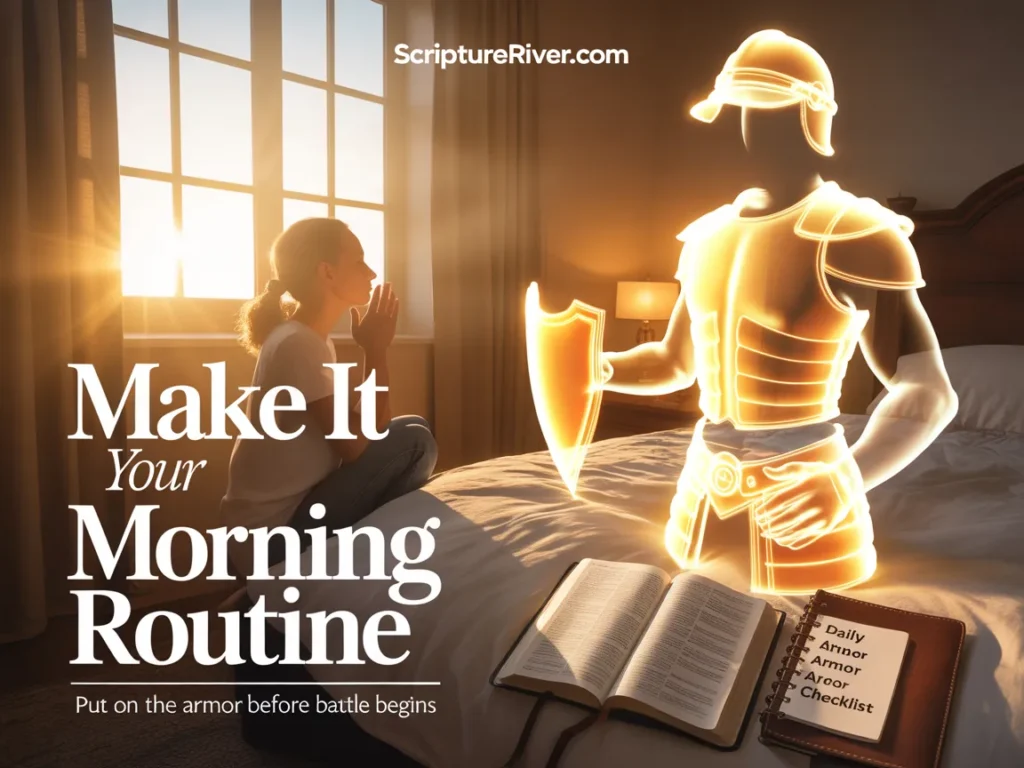
Make It Morning Routine
Don’t wait until you’re under attack to put on armor. Put it on before battle begins.
Spend five minutes each morning consciously putting on each piece. Speak it out loud. “I put on the belt of truth. I choose to believe God’s Word over lies today.” Work through each piece specifically.
Recognize What You’re Fighting
Different situations require emphasizing different armor pieces. Facing temptation? Focus on the shield of faith and sword of Scripture. Battling condemnation? Focus on the breastplate of righteousness. Doubting your salvation? Focus on the helmet.
Stand Firm
Paul uses “stand” or “stand firm” four times in Ephesians 6:11-14. The goal isn’t advancing or conquering. It’s standing firm when attacks come.
According to military historian J.E. Lendon’s research on Roman warfare, standing firm in formation was crucial to victory. Individual soldiers breaking ranks created vulnerability. Christians standing firm together in the armor God provides is how the church withstands spiritual attack.
Frequently Asked Questions About the Armor of God
Do I have to put on the armor every single day?
The armor represents spiritual realities that should characterize your ongoing Christian life. The daily “putting on” is consciously remembering and applying these truths. Some days you’ll need to focus more intentionally on specific pieces facing specific attacks. The practice keeps you spiritually alert rather than complacent.
Can I wear only some pieces of armor?
Paul says “take up the full armor.” Wearing only some pieces leaves you vulnerable where you’re unprotected. You might be strong in faith (shield) but weak in righteous living (breastplate), creating vulnerability the enemy exploits. The full armor works together comprehensively.
Is spiritual warfare real or just a metaphor?
Ephesians 6:12 clearly states “we wrestle” against spiritual forces, not flesh and blood. While Paul uses metaphorical language (armor, weapons), the spiritual reality behind the metaphor is actual warfare against real spiritual enemies. The metaphor helps us understand invisible spiritual reality through visible military imagery.
What if I forget to put on the armor and get attacked?
God’s grace covers your forgetfulness. If you realize mid-attack you’re unprepared, put on the armor immediately through prayer and Scripture. Confess vulnerability to God and ask for His protection. The armor is always available. It’s never too late to put it on.
Can the armor guarantee I’ll never fall to temptation?
The armor provides protection and defense, but you must actively use it. Having a shield doesn’t help if you don’t raise it when arrows come. Having the sword of Scripture doesn’t help if you don’t wield it against lies. The armor requires your active participation in cooperation with God’s power.
How do I know if I’m under spiritual attack?
Common signs include: persistent temptation to specific sins, thoughts contradicting Scripture that won’t leave your mind, unusual conflict in relationships without clear cause, sudden doubts about core beliefs, exhaustion that prevents spiritual disciplines, and patterns of defeat in areas where you were previously strong. Not every difficulty is spiritual attack, but these patterns often indicate enemy activity.
Prayer for Spiritual Protection
Heavenly Father, I acknowledge I’m in spiritual battle against an enemy who wants to destroy me. Thank You for providing everything I need to stand firm. I put on the belt of truth, choosing to believe Your Word over lies. I put on the breastplate of righteousness, resting in Christ’s righteousness covering me and pursuing holy living. I put on the gospel shoes, standing firm on the sure foundation of salvation by grace. I take up the shield of faith, trusting You when circumstances and feelings say I shouldn’t. I put on the helmet of salvation, secure in my identity as Your child. I take up the sword of the Spirit, Your Word that defeats every lie and temptation. Help me pray constantly, alert to the enemy’s schemes. Give me strength to stand firm when attacks come. Protect me, my family, and my church from the evil one. In Jesus’s powerful Name, Amen.
Scholarly Works Cited
Arnold, C. E. (1992). Powers of Darkness: Principalities and Powers in Paul’s Letters. InterVarsity Press. [Theological Study]
Lincoln, A. T. (1990). Ephesians. Thomas Nelson Publishers. [Biblical Commentary]
O’Brien, P. T. (1999). The Letter to the Ephesians. Eerdmans Publishing Company. [Biblical Commentary]
Peterson, E. H. (2005). The Message: The Bible in Contemporary Language. NavPress. [Bible Translation]
Strong, J. (2010). Strong’s Exhaustive Concordance of the Bible. Hendrickson Publishers. [Reference Book]
Wiersbe, W. W. (2007). The Bible Exposition Commentary: New Testament (Vol. 2). David C. Cook. [Expositional Commentary]

