
God isn’t trying to make you happy. He’s trying to make you like Jesus.
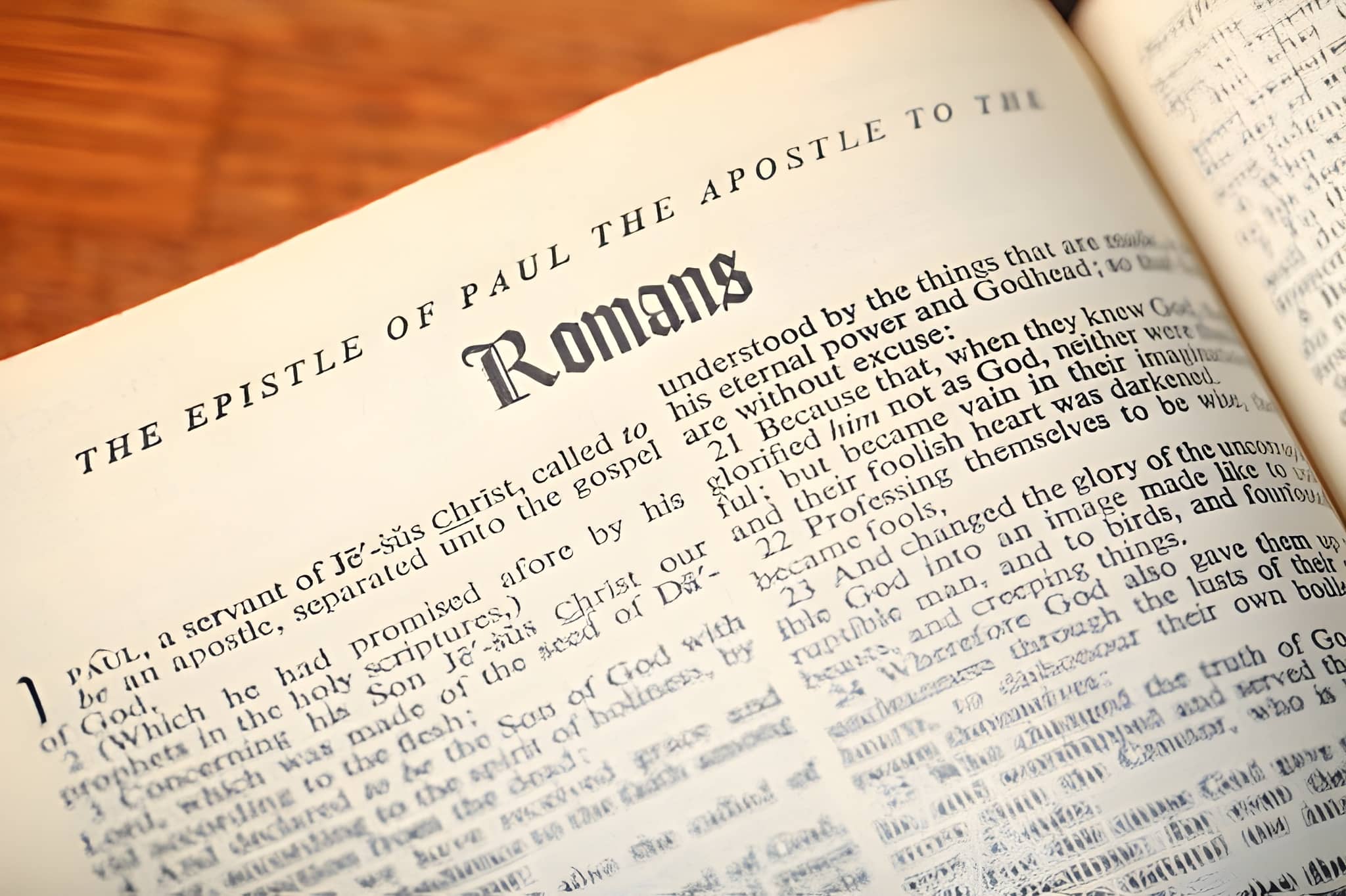
Romans 8:29, English Standard Version (ESV)
“For those whom he foreknew he also predestined to be conformed to the image of his Son, in order that he might be the firstborn among many brothers.”
Every hardship you face, every prayer God doesn’t answer the way you want, every disappointment that derails your plans serves one ultimate purpose: conforming you to Christ’s image.
That’s God’s agenda for your life.
Not comfort. Not success. Not even happiness. Christlikeness.
This verse sits in the middle of Romans 8, one of Scripture’s most profound chapters about suffering, hope, and God’s sovereign purposes.
Paul just finished explaining that creation groans, believers groan, and even the Spirit groans as we wait for final redemption.
Then he declares that God works everything toward one specific goal: making you look like Jesus.
Understanding what “conformed to Christ’s image” actually means requires examining the surrounding context, defining key terms Paul uses, grasping what Christ’s image entails, and recognizing what methods God employs to accomplish this conformity.
The transformation isn’t automatic. It’s not instant. And it’s often uncomfortable.
The Context: A Chain of Unbreakable Purposes
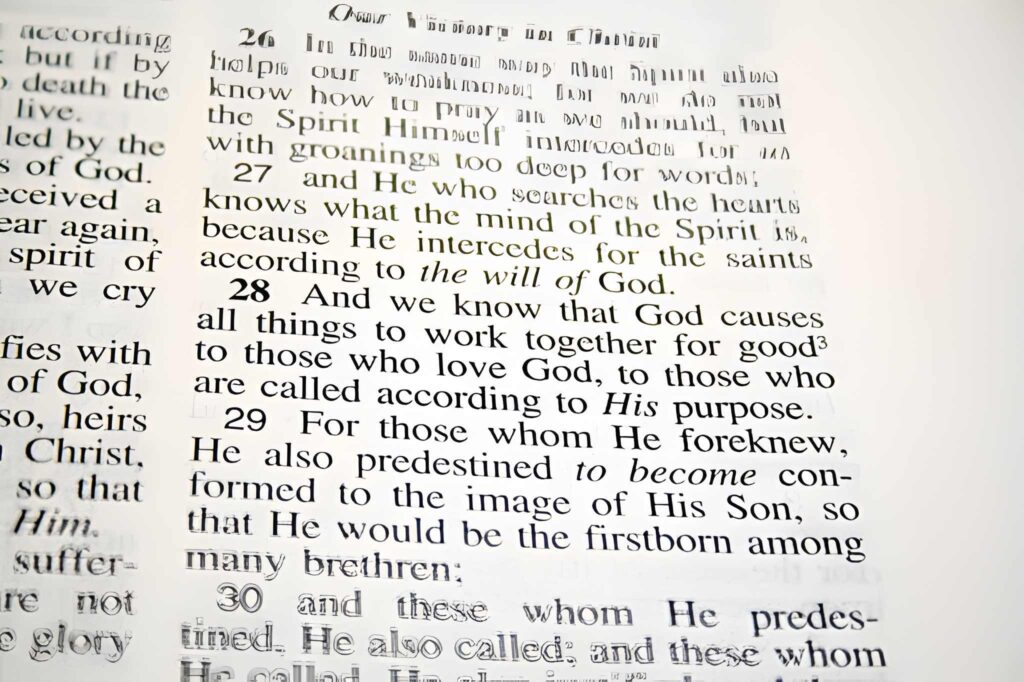
Romans 8:29 doesn’t stand alone. It’s the middle link in a chain Paul forges from verse 28 through verse 30.
Romans 8:28-30, Christian Standard Bible (CSB)
“We know that all things work together for the good of those who love God, who are called according to his purpose. For those he foreknew he also predestined to be conformed to the image of his Son, so that he would be the firstborn among many brothers and sisters. And those he predestined, he also called; and those he called, he also justified; and those he justified, he also glorified.”
The Foundation: All Things Work Together for Good
Paul establishes foundation: God works all things toward good for those who love Him and are called according to His purpose.
That good isn’t generic prosperity. Verse 29 defines it specifically: conformity to Christ’s image.
The “all things” include the suffering Paul just discussed: Persecution, hardship, famine, danger, and sword.
None of these separate believers from God’s love, and all of them serve His purpose of making you like Jesus.
The Chain: Foreknew, Predestined, Called, Justified, Glorified
Paul presents five links in unbreakable chain:
Foreknew: God knew you before creation. This isn’t just intellectual knowledge but intimate relational knowledge. He set His affection on you before time began.
Predestined: God predetermined your destiny: conformity to Christ’s image. This wasn’t afterthought or Plan B. From eternity past, God purposed to make you like Jesus.
Called: God effectually called you to Himself through the gospel. This isn’t general invitation but powerful summons that brings you from death to life.
Justified: God declared you righteous through Christ’s work. Your legal standing changed from guilty to innocent based on Christ’s substitutionary death.
Glorified: Paul uses past tense for future event. Your glorification is so certain he speaks of it as accomplished fact. When Christ returns or you die, you’ll be fully conformed to His image.
The entire chain serves the purpose stated in verse 29: conformity to Christ’s image.
What “Conformed to the Image of Christ” Actually Means
The Greek word “symmorphos” means to have the same form, to be shaped similarly. God is reshaping you to match Jesus’s pattern.
But what does Christ’s image include?
Christ’s Moral Character
Being conformed to Christ means developing His character qualities: love, joy, peace, patience, kindness, goodness, faithfulness, gentleness, self-control.
These aren’t personality preferences but fruit the Spirit produces as He transforms you.
Galatians 5:22-23, New International Version (NIV)
“But the fruit of the Spirit is love, joy, peace, forbearance, kindness, goodness, faithfulness, gentleness and self-control. Against such things there is no law.”
You’re being transformed to love like Jesus loved. To be patient like He was patient. To demonstrate self-control like He demonstrated self-control.
Christ’s Humble Attitude
Philippians 2:5-8, New King James Version (NKJV)
“Let this mind be in you which was also in Christ Jesus, who, being in the form of God, did not consider it robbery to be equal with God, but made Himself of no reputation, taking the form of a bondservant, and coming in the likeness of men. And being found in appearance as a man, He humbled Himself and became obedient to the point of death, even the death of the cross.”
Conformity to Christ includes His humility. His willingness to serve rather than be served. His obedience to the Father even unto death. His surrender of rights for others’ sake.
Christ’s Suffering and Glory
The immediate context of Romans 8:29 addresses suffering. Verses 17-18 state: “provided we suffer with him in order that we may also be glorified with him.
For I consider that the sufferings of this present time are not worth comparing with the glory that is to be revealed to us.”
Being conformed to Christ includes sharing in His sufferings now and His glory later. You can’t have resurrection without crucifixion. The path to glorification runs through suffering.
Christ’s Physical Resurrection Body
Ultimate conformity to Christ’s image includes bodily transformation. When Christ returns or when you die and are raised, your mortal body will be transformed into immortal, imperishable body like Christ’s resurrection body.
Philippians 3:20-21, English Standard Version (ESV)
“But our citizenship is in heaven, and from it we await a Savior, the Lord Jesus Christ, who will transform our lowly body to be like his glorious body, by the power that enables him even to subject all things to himself.”
How God Accomplishes This Conformity
Through the Spirit’s Internal Work
2 Corinthians 3:18, Christian Standard Bible (CSB)
“We all, with unveiled faces, are looking as in a mirror at the glory of the Lord and are being transformed into the same image from glory to glory; this is from the Lord who is the Spirit.”
The Holy Spirit progressively transforms you from the inside out as you behold Christ’s glory in Scripture. This isn’t instantaneous but gradual process across your lifetime.
Through Suffering and Trials
Romans 5:3-5, New International Version (NIV)
“Not only so, but we also glory in our sufferings, because we know that suffering produces perseverance; perseverance, character; and character, hope. And hope does not put us to shame, because God’s love has been poured out into our hearts through the Holy Spirit, who has been given to us.”
God uses suffering to shape character. The trials you face aren’t random or meaningless. They’re tools in God’s hands sculpting you into Christ’s likeness.
Through Discipline and Correction
Hebrews 12:10-11, New King James Version (NKJV)
“For they indeed for a few days chastened us as seemed best to them, but He for our profit, that we may be partakers of His holiness. Now no chastening seems to be joyful for the present, but painful; nevertheless, afterward it yields the peaceable fruit of righteousness to those who have been trained by it.”
God disciplines His children to produce holiness. When you’re corrected, resist, or endure difficulty as His discipline, He’s conforming you to Christ’s image.
Through Circumstances and Relationships
Every frustrating coworker, every difficult family member, every unexpected setback is opportunity for Christ-conforming transformation.
God orchestrates circumstances that expose your un-Christlike reactions and provide opportunities to respond like Jesus would.
Through Active Cooperation
While God initiates and empowers transformation, you’re not passive. You cooperate through spiritual disciplines: prayer, Scripture reading, worship, fellowship, service, obedience.
Colossians 3:10, English Standard Version (ESV)
“And have put on the new self, which is being renewed in knowledge after the image of its creator.”
You “put on” the new self actively. You pursue knowledge of God. You choose obedience. Transformation is partnership between God’s sovereign work and your active participation.
Why This Matters for Daily Life
It Reframes Suffering
When hardship hits, you’re not experiencing meaningless tragedy. You’re undergoing divinely orchestrated transformation. The difficulty has purpose: making you like Jesus.
That doesn’t make suffering painless. It makes it meaningful. There’s profound difference between enduring random meaningless pain and enduring purposeful transformative difficulty.
It Clarifies God’s Priorities
God isn’t primarily focused on making you comfortable, successful, or problem-free. His priority is making you holy. Once you understand that, His methods make sense even when they’re uncomfortable.
When He doesn’t answer prayers the way you want, when He allows difficulty you’d rather avoid, when He permits loss you can’t understand, remember: He’s pursuing conformity to Christ’s image, not your temporary comfort.
It Provides Endurance
Romans 8:18, Christian Standard Bible (CSB)
“For I consider that the sufferings of this present time are not worth comparing with the glory that is going to be revealed to us.”
Knowing suffering serves Christ-conforming purposes and that glorification awaits helps you endure present difficulty. You’re not suffering aimlessly. You’re being prepared for glory.
It Humbles Pride
If God’s goal is making you like Jesus, you’re clearly not there yet. This realization should produce humility. You’re work in progress. The areas where you’re least like Christ are exactly the areas God is working on.
It Gives Hope
The chain Paul describes guarantees completion. Those God foreknew, He predestined. Those He predestined, He called. Those He called, He justified. Those He justified, He glorified. God finishes what He starts.
Philippians 1:6, New International Version (NIV)
“Being confident of this, that he who began a good work in you will carry it on to completion until the day of Christ Jesus.”
Frequently Asked Questions
Does this mean I should seek suffering?
No. Don’t seek suffering, but don’t be surprised when it comes. God uses it for transformation, but seeking it is presumptuous. Jesus prayed “let this cup pass from me” in Gethsemane. Desiring to avoid suffering is natural and normal.
How do I know if I’m being conformed to Christ’s image?
Look for fruit over time. Are you more patient than last year? More loving? More humble? More like Jesus in how you respond to difficulty? Growth might be gradual and imperceptible daily, but noticeable across months and years.
What if I keep failing in the same areas?
Sanctification is lifelong process. Persistent struggle doesn’t mean God’s not working. It might mean He’s addressing deeper issues beneath surface sins. Keep pursuing obedience while trusting God’s transformative power.
Can I speed up the process?
You can cooperate more fully through consistent spiritual disciplines, but you can’t force God’s timeline. Some character development requires time and repeated trials. Trust His pace while actively participating in your growth.
What about Christians who seem to stop growing?
Plateau is possible when believers resist the Spirit, neglect disciplines, or harden hearts to God’s work. However, genuine believers ultimately persevere. Temporary stagnation doesn’t mean final abandonment.
Does everyone reach the same level of Christlikeness?
Not in this life. Final glorification will complete the process for all believers, but earthly sanctification varies based on faithfulness, circumstances, and God’s sovereign timing. All are being conformed, but not all at the same rate.
Say This Prayer
Father, You’re conforming me to Christ’s image. That’s Your purpose for my life. Forgive me when I resist the process, preferring my comfort to Your purpose. Help me trust that every hardship, every trial, every difficulty You allow or ordain serves this transformation. Give me eyes to see Your hand at work even in circumstances I wouldn’t choose. Make me patient with the process and faithful in cooperation. Show me where I’m least like Jesus and change me there. Humble my pride. Deepen my love. Strengthen my obedience. Make me more like Your Son every day. I know You’ll complete what You’ve started. Until then, sustain me through the transformation. In Jesus’s Name, Amen.
Works Consulted
Moo, D. J. (1996). The Epistle to the Romans. Eerdmans Publishing Company. [Biblical Commentary]
Packer, J. I. (1973). Knowing God. InterVarsity Press. [Systematic Theology]
Peterson, E. H. (2005). The Message: The Bible in Contemporary Language. NavPress. [Bible Translation]
Schreiner, T. R. (1998). Romans. Baker Academic. [Biblical Commentary]
Strong, J. (2010). Strong’s Exhaustive Concordance of the Bible. Hendrickson Publishers. [Reference Book]

