
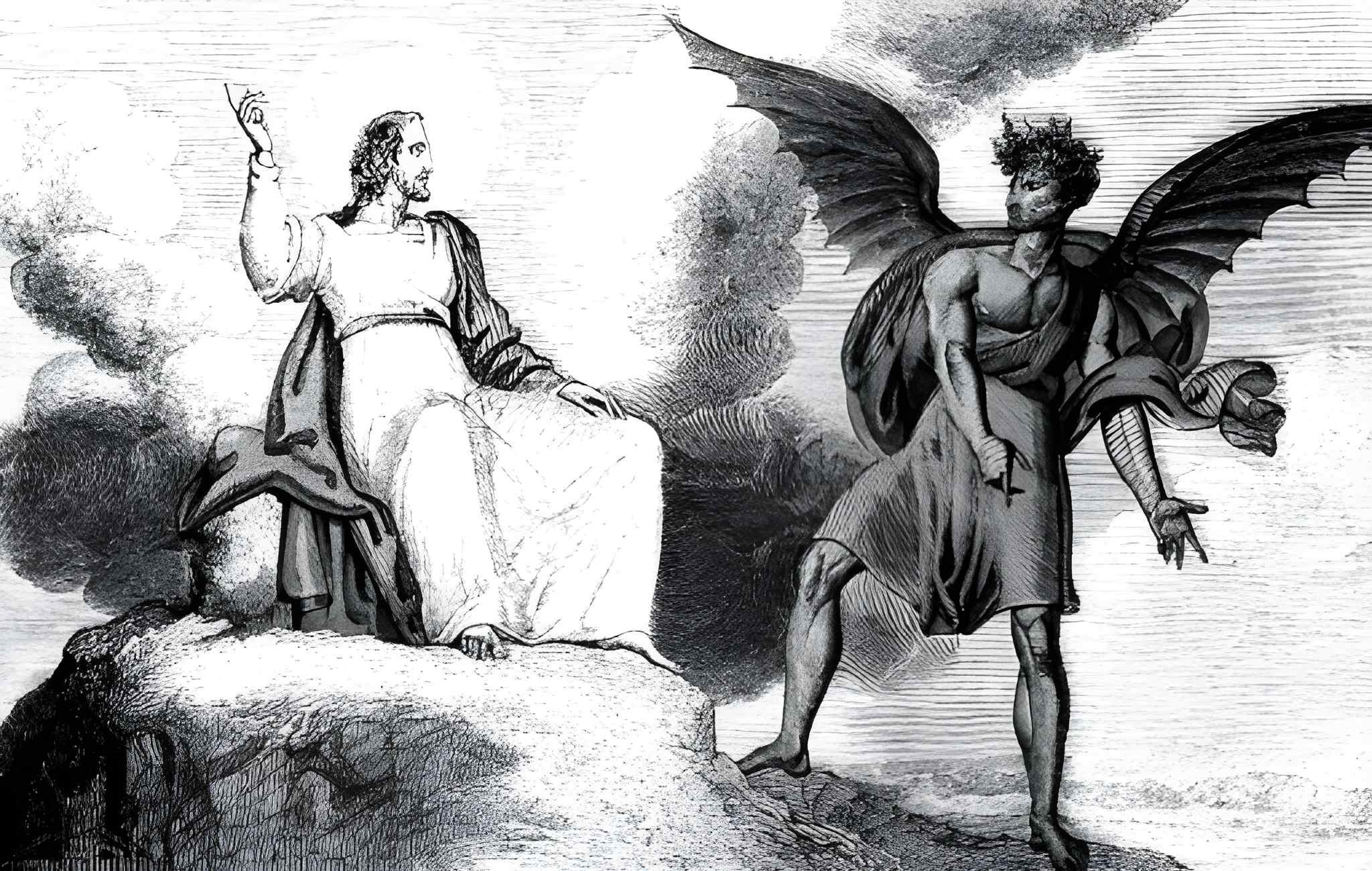
Recorded in Matthew 4:1-11, Mark 1:12-13, and Luke 4:1-13, this passage depicts Christ immediately after His baptism being led by the Spirit into a period of intense testing.
Understanding this account helps Christians today navigate trials, resist sin, and grow in obedience to God.
Understanding the Context
Jesus’ Preparation for Ministry
Immediately after His baptism, Jesus enters the wilderness for forty days.
This period occurs at the threshold of His public ministry, signaling preparation, dependence on God, and confrontation with spiritual opposition.
The Spirit leads Him into isolation, which demonstrates that spiritual readiness often involves deliberate periods of testing and reflection.
This wilderness experience echoes Israel’s forty years in the desert, suggesting that God uses trials to teach reliance, humility, and faithfulness.
The Role of Fasting and Spiritual Discipline
Jesus abstains from food for forty days. The physical weakness emphasizes His humanity and amplifies the spiritual struggle.
His reliance on God’s Word, prayer, and the Spirit highlights the importance of spiritual disciplines when facing temptation.
Examining the Temptations
First Temptation: Turning Stones Into Bread
Jesus is hungry after forty days and nights in the wilderness. Satan tempts Him:
“If you are the Son of God, tell these stones to become bread.”
Matthew 4:3, NIV
This temptation appeals to physical need and self-interest. Jesus responds:
“It is written: ‘Man shall not live on bread alone, but on every word that comes from the mouth of God.'”
Matthew 4:4, NIV
The lesson here is clear: God’s provision surpasses physical necessity, and reliance on Him takes priority over self-serving solutions.
Second Temptation: Testing God
Satan takes Jesus to the pinnacle of the temple and says:
“If you are the Son of God, throw yourself down. For it is written: ‘He will command his angels concerning you, and they will lift you up in their hands, so that you will not strike your foot against a stone.'”
Matthew 4:6, NIV
This temptation is about presumption and forcing God’s hand. Jesus answers:
“It is also written: ‘Do not put the Lord your God to the test.'”
Matthew 4:7, NIV
Christ teaches obedience, trust, and respect for God’s timing, reminding believers not to manipulate God for personal gain.
Third Temptation: Power and Worship
Satan shows Jesus all the kingdoms of the world and says:
“All this I will give you, if you will bow down and worship me.”
Matthew 4:9, NIV
This is a temptation of ambition, authority, and compromise. Jesus counters:
“Away from me, Satan! For it is written: ‘Worship the Lord your God, and serve him only.'”
Matthew 4:10, NIV
Here, Jesus affirms exclusive devotion to God and rejects shortcuts to power that compromise righteousness.
Lessons for Today’s Christian
1. Temptation Often Targets Immediate Needs and Desires
Like Jesus, believers are frequently tempted in areas of vulnerability—hunger, stress, fear, or ambition. Awareness of these points allows Christians to prepare spiritually through prayer, Scripture, and accountability.
2. Scripture is Our Primary Defense
Jesus resists each temptation by quoting Scripture. This demonstrates that familiarity with God’s Word is critical for spiritual victory. Knowing the Bible provides discernment, clarity, and authority when facing trials.
3. Trust and Patience are Vital
Christ’s refusal to test God or seize shortcuts teaches patience and trust. Modern believers can rely on God’s timing and provision rather than acting impulsively or unethically to meet needs.
4. Worship and Loyalty Should Be Uncompromising
The temptation to gain power at the cost of obedience reminds Christians that spiritual integrity cannot be compromised for worldly gain. Worshiping God exclusively ensures alignment with His purposes.
5. Spiritual Preparation is Essential
Just as Jesus’ fasting and prayer strengthened Him, spiritual disciplines prepare believers for trials. Regular engagement with God builds resilience against temptation.
Applying the Wilderness Lessons
- Identify your vulnerabilities: Understand what areas Satan or sin might exploit.
- Use Scripture as a sword: Memorize and meditate on passages relevant to your struggles.
- Practice obedience and patience: Avoid shortcuts or manipulative actions to force God’s hand.
- Engage in spiritual disciplines: Fasting, prayer, worship, and service cultivate spiritual strength.
- Seek accountability: Community support and wise counsel reinforce resistance to temptation.
Frequently Asked Questions
How long was Jesus tempted in the wilderness?
According to Scripture, Jesus was in the wilderness for forty days and nights (Matthew 4:2, NIV). This period symbolizes preparation, trial, and testing, echoing Israel’s forty-year desert experience.
Why did Satan tempt Jesus immediately after His baptism?
Temptation occurred at a critical moment when Jesus began His public ministry. It demonstrates that spiritual opposition often intensifies during seasons of purpose, growth, or calling.
Can Christians face temptations similar to Jesus?
Yes. Temptations targeting physical needs, pride, authority, or material gain are common. Christians can learn from Jesus’ responses: Scripture, prayer, and unwavering faithfulness.
What role does Scripture play in resisting temptation?
Scripture equips believers with truth, discernment, and authority to counter lies and enticements. Jesus exemplifies using God’s Word effectively against Satan’s schemes.
How does fasting help resist temptation?
Fasting cultivates self-discipline, spiritual sensitivity, and dependence on God. It strengthens believers to prioritize spiritual over physical needs during trials.
Did Jesus’ temptation teach about God’s timing?
Yes. By refusing to force God’s hand or take shortcuts, Jesus models trust and patience, emphasizing that obedience and faith in God’s timing are essential.
Prayer For Strength and Guidance
Heavenly Father, thank You for the example of Your Son, who overcame temptation by relying on Your Word, Your Spirit, and unwavering obedience. Strengthen me in times of trial. Teach me to recognize my weaknesses, resist sin, and trust in Your timing. Help me to live with integrity, to worship You alone, and to seek Your will above all else. Guard my heart and mind, provide me with wisdom, and surround me with support and accountability. May my life reflect the victory Christ has won, and may I honor You in every choice I make. In Jesus’ name, Amen.
References
Carmichael, C. M. (1997). Law, legend, and biblical narratives: Leviticus and beyond. Cornell University Press.
Carson, D. A. (1991). Matthew: The Expositor’s Bible Commentary. Zondervan.
France, R. T. (2007). The Gospel of Matthew. Eerdmans.
Hagner, D. A. (1995). Matthew 1-13 (Word Biblical Commentary). Thomas Nelson.
The Holy Bible, New International Version. (2011). Zondervan.
Wenham, G. J. (1980). The Psalms as a resource for spiritual discipline. Eerdmans.
Wright, N. T. (2004). Jesus and the Victory of God. Fortress Press.

