

This verse isn’t what you think it is.
It’s not a cosmic endorsement of your five-year plan.
It’s also not a divine guarantee that everything works out according to your preferences.
Nor a promise that following Jesus means smooth sailing.
Jeremiah 29:11-13, English Standard Version (ESV)
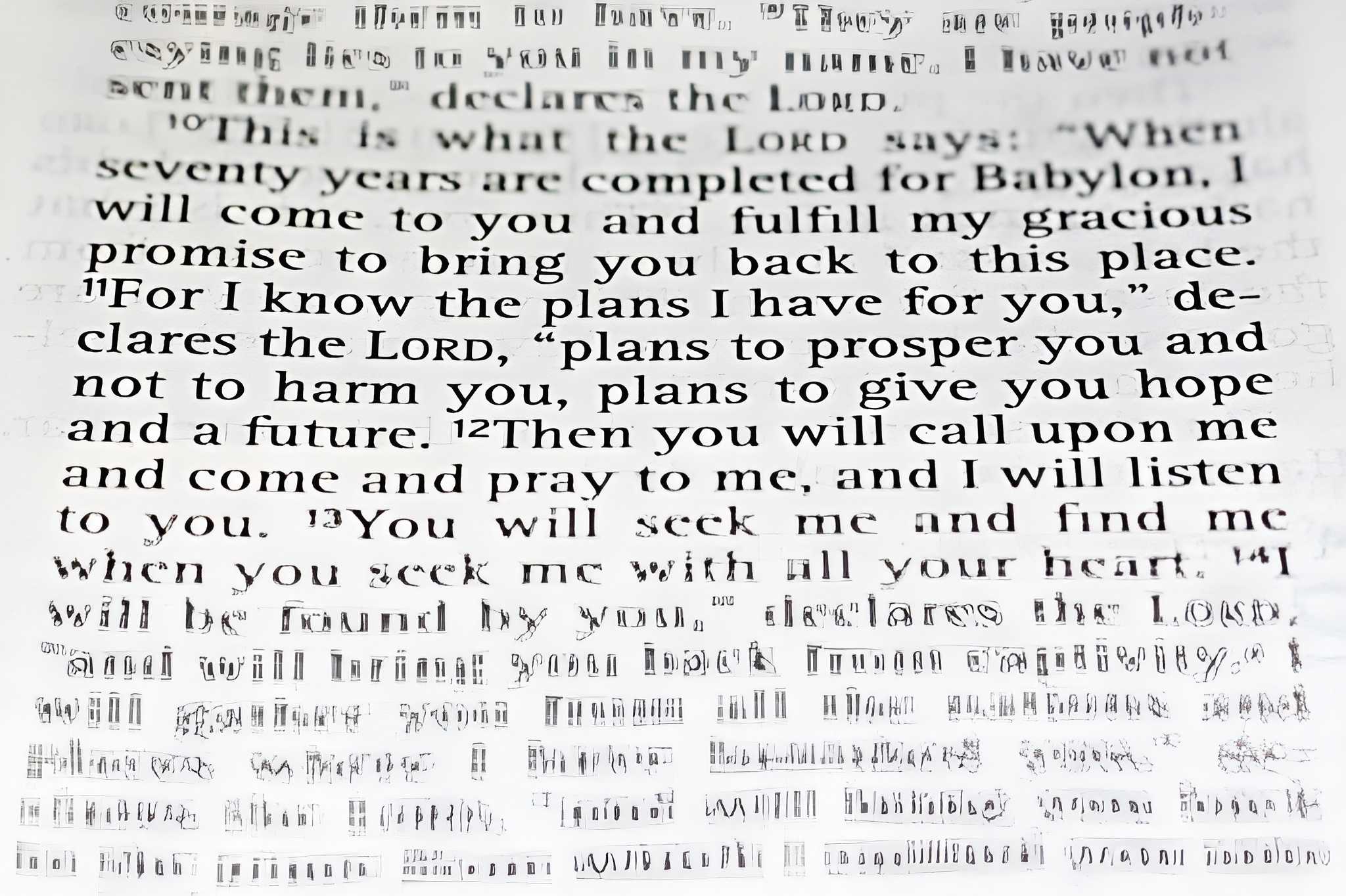
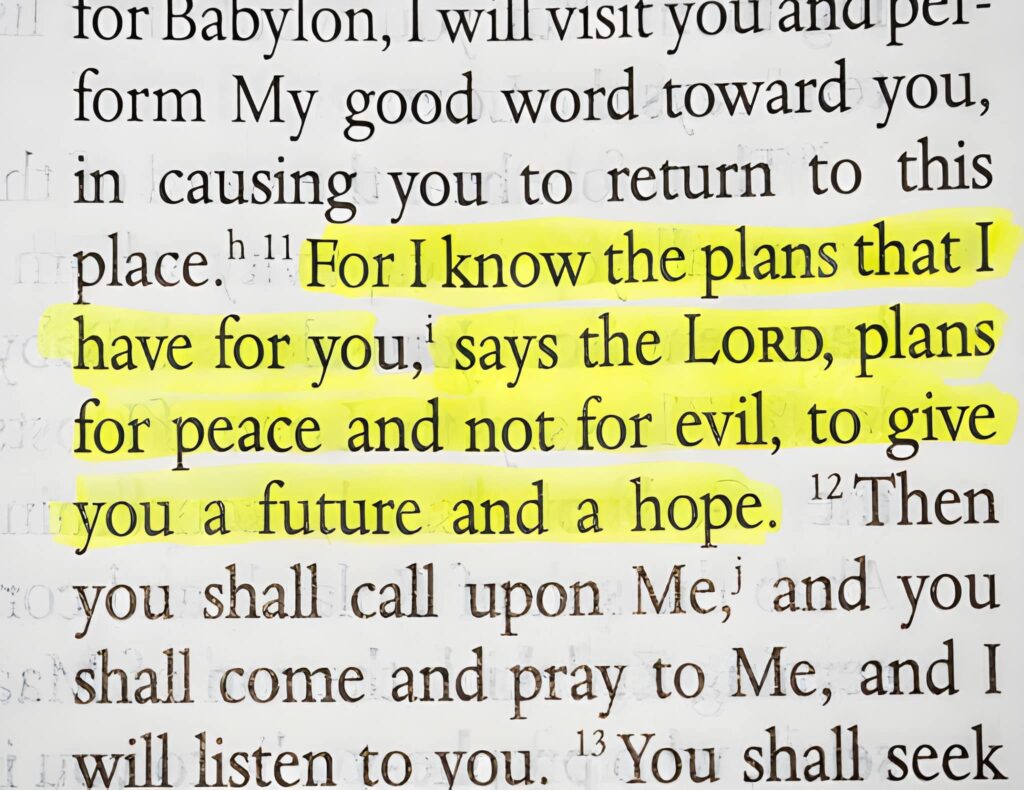
“For I know the plans I have for you, declares the Lord, plans for welfare and not for evil, to give you a future and a hope. Then you will call upon me and come and pray to me, and I will hear you. You will seek me and find me, when you seek me with all your heart.”
God spoke these words to people whose lives were falling apart as direct consequence of their rebellion against Him.
Their city was destroyed. Their families were torn apart.
They were living as captives in Babylon, far from home, with no realistic hope of return anytime soon.
And into that devastation, God made this promise.
Understanding the context doesn’t diminish the verse’s power. It actually reveals how profound God’s faithfulness is.
He wasn’t promising them escape from consequences.
He was promising His purposes would prevail despite their mess, through their suffering, and across timelines that exceeded their lifetimes.
That’s far more trustworthy than promising everything will turn out fine if you just believe hard enough.
The Reality These People Faced
Judah had been warned.
For generations, prophets showed up with the same message: turn from your idolatry, stop oppressing the poor, quit trusting political alliances more than you trust God.
Judah ignored them all.
So God did what He said He would do.
Babylon conquered Jerusalem in 597 BC and took the first wave of captives.
In 586 BC, they came back and finished the job. The temple Solomon built was destroyed. Jerusalem’s walls were demolished.
The survivors either died or were marched to Babylon in chains.
This wasn’t random tragedy. It was the consequence Judah had been courting for decades.
In Babylon, false prophets told the exiles what they wanted to hear: “This is temporary. God will bring you home soon. Any day now.” It was comforting. It was also completely false.
Jeremiah wrote a letter from Jerusalem with a different message: Build houses. Plant gardens. Settle in. You’re going to be here for seventy years.
Seventy years. Most people reading that letter would die in Babylon without ever seeing Jerusalem again.
And that’s when God made the promise in verses 11-13.
What God Was Actually Promising
Plans for Your Welfare
The Hebrew word is “shalom.” It means wholeness, flourishing, things being as they should be. God promised their exile served His good purposes, not meaningless suffering.
But here’s what you need to understand: His plan for their welfare included seventy years of captivity.
The path to the promised future ran straight through prolonged hardship.
God wasn’t saying “I’ll make everything comfortable for you.”
He was saying “I have purposes in this pain, and those purposes are good even when the process is hard.”
A Future and a Hope
This promise operated on generational timelines.
Most original recipients would never personally experience the return to Jerusalem. Their children might not either. Maybe their grandchildren would see it.
The hope God offered wasn’t “your circumstances will improve soon.” It was “My purposes for My people will not fail, even if fulfillment takes longer than your lifetime.”
That’s actually more solid than hoping for quick fixes.
When You Seek Me With All Your Heart
This part matters. God promised to be found by those who genuinely sought Him, not those who casually added Him to their lives when convenient.
The exile was designed to break Judah’s attachment to everything they’d been trusting instead of God.
When all the false refuges were stripped away, they’d finally seek Him with their whole hearts. Only then would they find Him.
What This Means for You Today
You can apply this verse to your life. But apply it honestly.
God has good plans for you. That’s true. Those plans aim at your ultimate welfare. Also true.
But the path to that welfare might include things that feel like the opposite of blessing. That’s where most people’s theology gets uncomfortable.
When you face prolonged difficulty, when prayers go unanswered for years, when life doesn’t unfold according to your expectations, you’re not outside God’s plan.
You might be exactly where He intends you to be.
God’s purposes for you aren’t primarily about your comfort. They’re about conforming you to Christ’s image.
That requires stripping away whatever you’re trusting instead of Him. Sometimes that stripping process hurts.
Your Timeline Isn’t His Timeline
Seventy years is a lifetime. God’s promise to Judah operated across generations.
His promises to you might also require patience that exceeds what you’re willing to give.
You pray for immediate relief. God works on eternal scales. Learning to trust Him when His timeline doesn’t match yours is part of spiritual maturity.
Corporate Promises and Individual Lives
God made this promise to the exile community as a whole, not just to individuals.
Some people died in Babylon without seeing restoration. Yet God’s promise to bring His people back remained true.
God has purposes for the Church collectively and for you individually.
Sometimes those purposes require individual sacrifice for corporate good. Your difficult circumstances might serve purposes larger than your personal comfort.
The Condition Still Applies
God promised to be found by those who sought Him wholeheartedly. That condition applies to you too.
If you’re not finding God, examine whether you’re genuinely seeking Him or just wanting Him to fix your circumstances. There’s a difference between wanting God and wanting what God can give you.
How to Use This Verse Correctly
Stop treating it like a prosperity promise. God didn’t tell Judah “everything will be great.” He told them “I have purposes in your suffering, and if you seek Me through it, you’ll find Me.”
That’s what you should claim from this verse.
Not that God will give you the life you want, but that He’ll accomplish His purposes even through circumstances you didn’t want.
Not that everything works out on your schedule, but that God’s plans succeed on His schedule.
When you quote this verse, remember it was given to people facing seventy years of exile for their own rebellion.
If that’s the context for God’s promise of good plans, you should probably adjust your expectations about what “good plans” might include in your life.
Focus on God, Not Circumstances
The promise’s power is in God’s faithfulness to His purposes, not in circumstances improving.
He proved faithful to Judah by eventually restoring them exactly as promised. He’ll prove faithful to you by accomplishing what He intends, even when the process doesn’t look like you expected.
Seek Him Now, Not Just When Delivered
The exiles were commanded to seek God during captivity, not after it ended. You seek God in difficulty, not just when difficulty passes.
Your relationship with God isn’t on pause until things get better. He’s present in your exile. The question is whether you’ll look for Him there.
The Gospel Connection
Everything in the Old Testament points toward Christ. Judah’s exile represented humanity’s separation from God through sin. The promised restoration pointed toward redemption through Jesus.
God’s plan for your welfare finds ultimate expression in the gospel: forgiveness through Christ’s death, reconciliation with God, the Holy Spirit dwelling in you, future resurrection and glorification.
That’s the welfare God promises.
Not comfortable circumstances but right relationship with Him. Not easy life but eternal life. Not immediate resolution of every problem but ultimate victory over sin and death.
Ephesians 1:11, Christian Standard Bible (CSB)
“In him we have also received an inheritance, because we were predestined according to the plan of the one who works out everything in agreement with the purpose of his will.”
Frequently Asked Questions
Can I still claim this promise personally?
Yes, but understand what you’re claiming. God has purposes for your life that will ultimately produce good. Those purposes might include difficulty, delay, and suffering. Claim the promise honestly, not selectively.
What if my suffering is from my own poor choices?
Judah’s exile resulted from their sin. God still promised good plans. If you’re experiencing consequences of sinful choices, God can still work redemptively through those consequences if you seek Him genuinely.
Doesn’t this make God seem harsh?
God allowed seventy years of exile He could have prevented. That’s sobering. But He also maintained relationship with His people through it, promised restoration, and actually fulfilled that promise. He’s serious about sin and faithful in love simultaneously.
How do I keep trusting when nothing changes?
The exiles had to trust across decades without seeing change. Some died trusting promises they never saw fulfilled. That’s faith. Trusting God’s character and promises more than visible circumstances.
What about verses saying to seek Babylon’s welfare?
Those matter too. God told exiles to engage their current circumstances faithfully rather than putting life on hold waiting for deliverance. Apply that today: be faithful where God has you, even when it’s not where you want to be.
Can God’s plans really include things I consider disasters?
From Judah’s perspective, seventy years of captivity was disaster. God called it His plan for their welfare. What feels catastrophic to you might serve purposes you can’t see. Trust His perspective over your feelings.
Say This Prayer
Father, help me trust Your plans when they don’t match mine. The exiles You spoke to faced seventy years of suffering, and You called that Your good plan. That challenges my assumptions about how You work. Forgive me when I treat Your promises like guarantees of comfort rather than assurances of Your faithfulness. Teach me to seek You genuinely during difficulty, not just pray for circumstances to change. Give me patience for timelines that exceed my preferences. Help me believe Your purposes are good even when Your methods are hard. I’m learning that following You costs more than I thought but offers more than I imagined. Keep me faithful. In Jesus’s Name, Amen.
Source Documentation
Dearman, J. A. (2002). Jeremiah, Lamentations. Zondervan. [Biblical Commentary]
Longman, T., & Dillard, R. B. (2006). An Introduction to the Old Testament (2nd ed.). Zondervan. [Old Testament Survey]
Peterson, E. H. (2005). The Message: The Bible in Contemporary Language. NavPress. [Bible Translation]
Strong, J. (2010). Strong’s Exhaustive Concordance of the Bible. Hendrickson Publishers. [Reference Book]
Thompson, J. A. (1980). The Book of Jeremiah. Eerdmans Publishing Company. [Biblical Commentary]

