

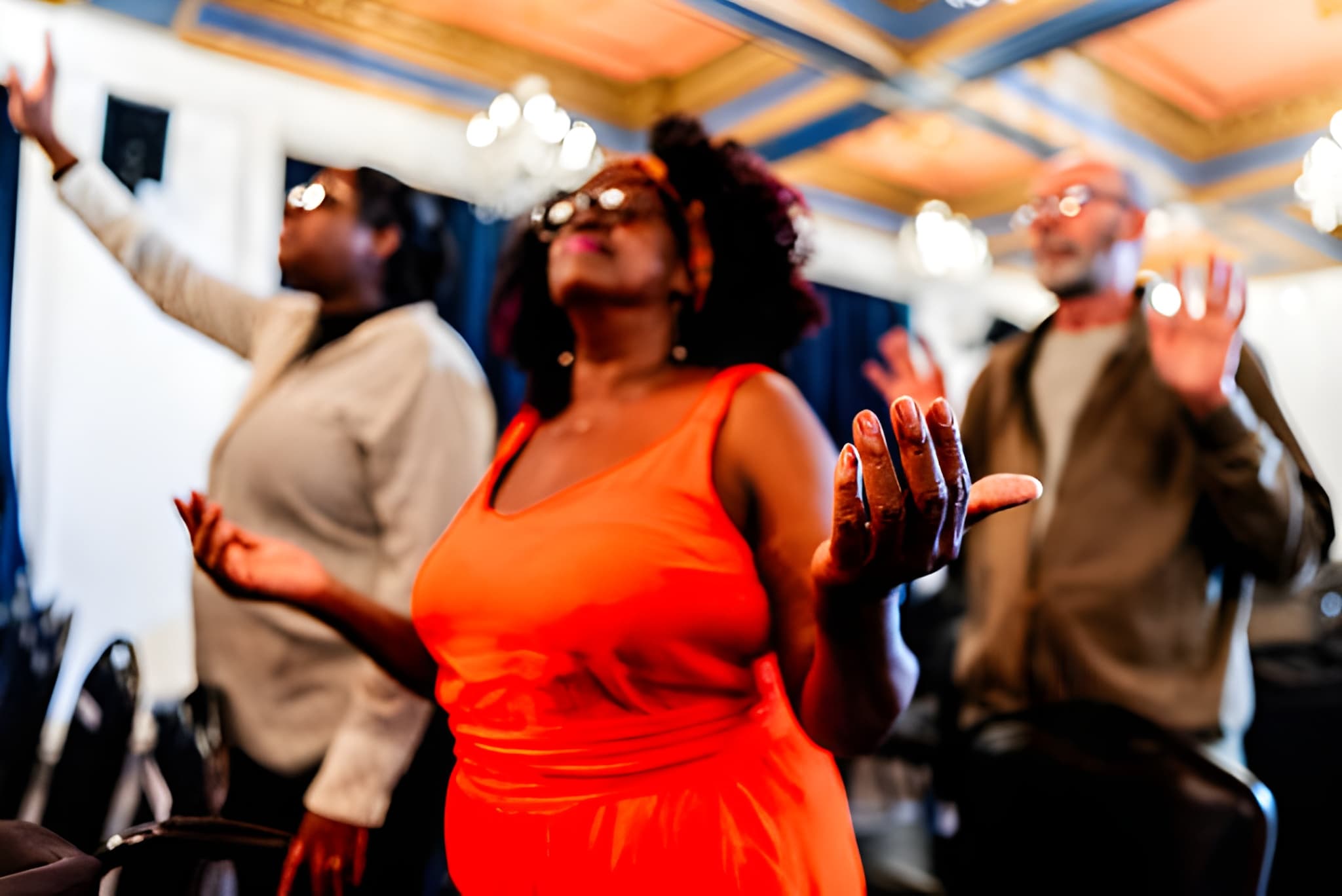
I thought I was worshiping God every Sunday for ten years before I understood what worship actually meant.
I sang the songs.
I raised my hands during emotional moments.
I cried when the music swelled.
I felt close to God during the worship set and checked “worshiped this week” off my spiritual to-do list.
Then I read Romans 12:1 and realized worship isn’t what happens during the 25-minute music portion of church.
It’s what happens Monday through Saturday when no one’s singing, no lights are dimmed, and no emotional atmosphere is manufactured.
Worship is offering your entire life to God as a living sacrifice.
That’s vastly different from singing songs about Him.
Most Christians equate worship with music.
We say “the worship was great today” when we mean the band was good and the songs were moving.
We hire “worship leaders” whose primary qualification is musical ability. We attend “worship conferences” that are essentially concerts with Christian lyrics.
But biblical worship transcends music entirely.
Now don’t get me wrong, music can be worship, but worship is far bigger than music.
And understanding what Scripture actually means by worship changes how you live every moment of every day, not just how you spend Sunday morning.
The Biblical Definition of Worship
The English word “worship” comes from Old English “weorthscipe,” meaning to ascribe worth to something.
Biblical worship means ascribing ultimate worth to God through how you think, speak, and live.
Old Testament Worship: Shachah
The primary Hebrew word for worship is “shachah,” appearing over 170 times in the Old Testament. It means to bow down, to prostrate oneself, to pay homage.
According to Hebrew lexicographer William Gesenius’ work on biblical Hebrew, shachah emphasizes the physical posture of submission before someone greater.
When Abraham “worshiped” God in Genesis 22:5 before offering Isaac, he was demonstrating complete submission to God’s will through physical action.
New Testament Worship: Proskyneo and Latreuo
The Greek “proskyneo” means to bow down, to show reverence, to honor. It appears about 60 times in the New Testament describing worship directed toward God.
But another Greek word is equally important: “latreuo,” meaning to serve, to minister, to worship through service. This word connects worship directly to how you live, not just how you bow.
Romans 12:1, English Standard Version (ESV)
“I appeal to you therefore, brothers, by the mercies of God, to present your bodies as a living sacrifice, holy and acceptable to God, which is your spiritual worship.”
Paul defines worship as presenting your body as living sacrifice.
That’s comprehensive.
It includes everything you do with your body: your work, your rest, your relationships, your choices, your sexuality, your mode of eating, your speaking and other dispositions.
What Worship Is Not
Worship Is Not Just Music
This is the most common misconception in contemporary Christianity.
Music can be worship when it ascribes worth to God and flows from a life submitted to Him. But music can also be performance, entertainment, or emotional manipulation that has nothing to do with actual worship.
According to worship theologian Robert Webber’s research on worship through church history, the equation of worship with music is relatively recent, emerging primarily in the 20th century with the contemporary worship movement.
Historic Christianity understood worship as comprehensive life orientation toward God.
Worship Is Not Primarily About Your Experience
Contemporary worship culture often evaluates worship by how it makes you feel. “The worship was powerful today” usually means “I felt emotional during the music.”
But biblical worship is about God’s worth, not your feelings. When you worship God, you’re declaring His value regardless of whether you feel anything.
Psalm 29:2, Christian Standard Bible (CSB)
“Ascribe to the Lord the glory due his name; worship the Lord in the splendor of his holiness.”
Worship gives God glory He’s due. It’s not about what you get emotionally but about what God deserves objectively.
Worship Is Not Optional for Christians
Some Christians think worship is for people who are “into that sort of thing.” As if worship is a personality preference like enjoying jazz or classical music.
But worship is the mandatory response of every creature to the Creator. You were created to worship. The only question is whether you worship God or worship something else.
Biblical Examples of Worship Beyond Music
Scripture shows worship happening in diverse contexts that have nothing to do with singing.
Abraham’s Worship Through Obedience
Genesis 22:5, New International Version (NIV)
“He said to his servants, ‘Stay here with the donkey while I and the boy go over there. We will worship and then we will come back to you.'”
Abraham called sacrificing Isaac “worship.” This wasn’t a worship song. It was costly obedience to God’s command that made no logical sense. Worship sometimes means doing what God says when it costs you everything.
The Magi’s Worship Through Giving
Matthew 2:11, New King James Version (NKJV)
“And when they had come into the house, they saw the young Child with Mary His mother, and fell down and worshiped Him. And when they had opened their treasures, they presented gifts to Him: gold, frankincense, and myrrh.”
The magi worshiped by traveling long distance, bowing physically, and giving expensive gifts. Their worship was demonstrated through sacrifice, time, and resources.
The Bleeding Woman’s Worship Through Desperate Faith
Matthew 9:18, Christian Standard Bible (CSB)
“As he was telling them these things, suddenly one of the leaders came and knelt down before him, saying, ‘My daughter just died. But come and lay your hand on her, and she will live.'”
The Greek word for “knelt down” is proskyneo, the same word translated “worship.” This father worshiped Jesus by bringing his desperate need and trusting Jesus could meet it.
Jesus’s Worship in Gethsemane
Matthew 26:39, English Standard Version (ESV)
“And going a little farther he fell on his face and prayed, saying, ‘My Father, if it be possible, let this cup pass from me; nevertheless, not as I will, but as you will.'”
Jesus worshiped the Father by submitting His will to the Father’s will even though it meant the cross. Worship is ultimately about whose will you prioritize.
What True Worship Looks Like in Daily Life
Worship Through Your Work
Colossians 3:23-24, Christian Standard Bible (CSB)
“Whatever you do, do it from the heart, as something done for the Lord and not for people, knowing that you will receive the reward of an inheritance from the Lord. You serve the Lord Christ.”
When you work with excellence for God’s glory rather than human approval, your spreadsheets become worship. Your client calls become worship. Your dishes become worship.
This doesn’t mean every task feels spiritual. It means you’re doing ordinary work as offering to an extraordinary God.
Worship Through How You Treat People
Matthew 25:40, New International Version (NIV)
“The King will reply, ‘Truly I tell you, whatever you did for one of the least of these brothers and sisters of mine, you did for me.'”
Serving others is serving Jesus. When you help someone in need, you’re worshiping God through compassionate action.
Worship happens when you’re patient with the difficult coworker. When you listen to the lonely neighbor. When you serve your family without resentment.
Worship Through Obedience to Scripture
1 Samuel 15:22, English Standard Version (ESV)
“And Samuel said, ‘Has the Lord as great delight in burnt offerings and sacrifices, as in obeying the voice of the Lord? Behold, to obey is better than sacrifice, and to listen than the fat of rams.'”
Obedience is worship. When you choose God’s way over your preference, you’re declaring God’s worth through your choices.
Sexual purity is worship. Financial generosity is worship. Forgiving someone who hurt you is worship. Each act of obedience says “God, You’re worth more than what I’m giving up.”
Worship Through Suffering
1 Peter 4:16, Christian Standard Bible (CSB)
“But if anyone suffers as a Christian, let him not be ashamed but let him glorify God in having that name.”
When you suffer for Christ’s sake without abandoning faith, you worship God by demonstrating He’s worth more than comfort or safety.
This is perhaps the purest worship: staying faithful when faithfulness costs you everything.
How Music Fits Into Biblical Worship
Music isn’t wrong. Scripture commands singing to God repeatedly.
Psalm 95:1-2, English Standard Version (ESV)
“Oh come, let us sing to the Lord; let us make a joyful noise to the rock of our salvation! Let us come into his presence with thanksgiving; let us make a joyful noise to him with songs of praise!”
Music becomes worship when:
It’s directed toward God, not performed for people. If you’re more concerned about how you sound than what you’re saying to God, it’s performance, not worship.
The lyrics align with biblical truth. Singing lies about God isn’t worship regardless of how beautiful the melody is.
It flows from a life submitted to God. You can’t worship authentically through song on Sunday while living in rebellion Monday through Saturday. Amos 5:21-24 records God’s rejection of religious music from people whose lives contradicted their songs.
Your heart engages with the words, not just your voice. Singing on autopilot while thinking about lunch isn’t worship. Worship requires conscious engagement with what you’re declaring about God.
The Heart Behind All Worship
True worship requires right heart posture.
Worship Requires Humility
You must recognize God’s supreme worth and your complete dependence. Pride prevents worship by making you the center instead of God.
Worship Requires Truth
John 4:23-24, Christian Standard Bible (CSB)
“But an hour is coming, and is now here, when the true worshipers will worship the Father in Spirit and in truth. Yes, the Father wants such people to worship him. God is spirit, and those who worship him must worship in Spirit and in truth.”
Worship in truth means worship grounded in accurate understanding of God revealed through Scripture, not worship based on who you imagine or prefer God to be.
Worship Requires Faith
Hebrews 11:6, New International Version (NIV)
“And without faith it is impossible to please God, because anyone who comes to him must believe that he exists and that he rewards those who earnestly seek him.”
You can’t worship a God you don’t believe exists or don’t believe is good. Worship assumes faith in God’s existence, character, and promises.
Frequently Asked Questions About Worship
Is it wrong to enjoy worship music emotionally?
No. Emotions aren’t wrong in worship. God created emotions and designed music to move us. The problem comes when you evaluate worship by emotional intensity rather than by whether you’re genuinely ascribing worth to God. Emotional worship can be genuine. Unemotional worship can also be genuine. Neither is superior.
Can unbelievers worship?
Everyone worships something. The question is what you worship. Unbelievers worship creation instead of Creator (Romans 1:25). They might participate in religious rituals, but biblical worship requires relationship with God through Christ. Without that relationship, religious activity isn’t worship God accepts.
How do I worship when I don’t feel like it?
Worship isn’t dependent on feelings. You worship by choice, by will, by obedience regardless of emotions. Declare God’s worth when you don’t feel it. Obey when obedience is costly. Sing when you’d rather be silent. That’s often purer worship than when feelings make it easy.
Is corporate worship necessary or can I worship alone?
Both are biblical. Corporate worship is commanded (Hebrews 10:25). Individual worship is modeled throughout Scripture. You need both. Corporate worship provides accountability, encouragement, and unity. Individual worship develops personal intimacy with God. Don’t neglect either.
What if my church’s worship style doesn’t resonate with me?
Worship isn’t about your preferences. If the worship is biblically faithful (truth-based lyrics, God-centered focus, appropriate reverence), your responsibility is to engage regardless of style preference. However, finding a church where you can worship freely without constant distraction is also valid. Balance personal preference with recognizing worship transcends style.
How do I make daily activities worship?
Do everything consciously for God’s glory. Before work, pray “God, I’m doing this for You today.” During conflict, choose responses that honor God. In mundane tasks, remember you’re serving Christ. Worship happens when you do ordinary things with extraordinary God-awareness.
Prayer for True Worshipers
Father, forgive me for reducing worship to Sunday morning music. Teach me what it means to worship You with my entire life. Help me ascribe to You the worth You deserve through how I work, how I love, how I speak, how I spend money, how I use my body, how I treat people, and how I respond to difficulty. When I sing, help me mean the words I’m singing. When I serve, help me serve You through serving others. When I obey, help me obey as worship. Make my whole life an offering to You. Transform me into a true worshiper who declares Your worth in every moment, not just during worship songs. In Jesus’s Name, Amen.
Referenced Works
Peterson, D. (1992). Engaging with God: A Biblical Theology of Worship. InterVarsity Press. [Theological Study]
Peterson, E. H. (2005). The Message: The Bible in Contemporary Language. NavPress. [Bible Translation]
Strong, J. (2010). Strong’s Exhaustive Concordance of the Bible. Hendrickson Publishers. [Reference Book]
Tozer, A. W. (1961). The Knowledge of the Holy. HarperOne. [Theological Work]
Webber, R. (1994). Worship Old and New. Zondervan. [Historical Study]
Wiersbe, W. W. (2007). The Bible Exposition Commentary: New Testament (Vol. 2). David C. Cook. [Expositional Commentary]

